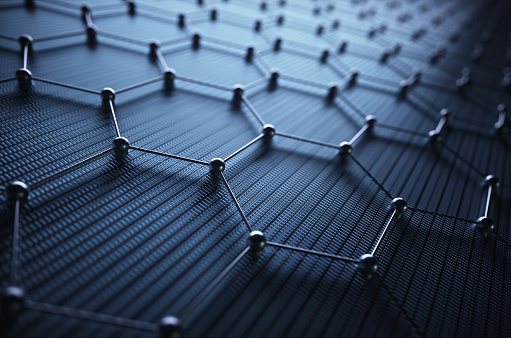
Inkable nanomaterials are the latest development in nanotechnology, and they promise big benefits for bendable and flexible electronics. These materials have the ability to be printed on various surfaces, making them a great option for creating bendable and flexible devices. This technology could lead to the development of wearable electronics, as well as many other potential applications. The inkable nanomaterials are composed of a combination of metal oxides and polymers, and they can be printed on both rigid and flexible substrates.
A new pathway for producing oxygen in plants has been discovered in the model organism Arabidopsis thaliana. This pathway, which is completely distinct from the one used by photosynthetic organisms, could lead to major advances in both basic and applied plant biology. Researchers from the Max Planck Institute for Plant Breeding Research in Cologne, Germany, have identified a new gene, SORL1, that is responsible for oxygen production in Arabidopsis thaliana. The gene is part of a novel pathway through which oxygen is generated in the absence of photosynthesis, and could be a major breakthrough for plant biology.
Today, scientists have discovered a new way to control electrons’ magnetic moments in a semiconductor lattice. By utilizing a new technique, researchers have been able to manipulate the magnetic moment of electrons in a semiconductor lattice, giving them the ability to switch between two different magnetic states. This breakthrough opens up the possibility of developing new types of magnetic devices that could be useful in a range of applications, from spintronics to quantum computing.
A new tool for visualizing the electron dynamics of liquid helium has been developed by a team of researchers from the University of California, Berkeley. The new tool, which combines a cryogenic scanning tunneling microscope (STM) with a nanoscale imaging technique, is capable of producing high-resolution images of the electron clouds of liquid helium. The researchers believe that this new technique will provide insight into the physical properties of liquid helium, and enable scientists to study the behavior of electrons in liquids.
Today, a breakthrough in understanding galaxies has been made! After years of research, scientists have discovered a new method to classify galaxies: by the strength of their jets. This new classification system is based on the jets of plasma that are emitted by the galaxies, and have been classified into three groups: weak, intermediate, and strong jets. With this system, scientists can now better understand the evolution of galaxies over time, and what it can tell us about the universe.
Scientists from the University of California, Berkeley have recently discovered a way to recreate the atmosphere of early Earth in their laboratory in order to study how oxygen may have first been produced. By creating a hot and humid environment, they are able to simulate conditions that may have been present billions of years ago. This new research could help us to better understand how oxygen was able to become a major component of the Earth’s atmosphere.
3D printing has been a popular technology for many years, but now it’s being used to create something truly unique: food! Scientists have developed a recipe for 3D printing food using a combination of “additive” ingredients, such as plant-based proteins, starches, and oils. This revolutionary technology could revolutionize the way we think about food production and nutrition, as it allows for greater control over the ingredients used in a dish, as well as the ability to customize the food to the individual’s nutritional needs.
In a recent breakthrough, a team of scientists have developed a new database to classify minority-serving institutions (MSIs), with the potential to open new pathways for research and collaboration in higher education. The database, which is now publicly available, categorizes MSIs in the United States into four distinct types: Historically Black Colleges and Universities (HBCUs), Hispanic-serving institutions (HSIs), Asian American and Native American Pacific Islander-serving institutions (AANAPISIs), and Tribal Colleges and Universities (TCUs).
Today, a team of researchers have announced a revolutionary new technology – the optical door. This door is capable of using ultrafast, light-based electronics to transport data at speeds that are hundreds of times faster than current traditional electronics. The optical door works by using light to transmit data, allowing for much faster speeds than what is currently available. The ultrafast light-based electronics could be used for a wide range of applications, from medical imaging to robotics, and could even revolutionize the way we use the internet.
Recent advancements in atomic-scale imaging have enabled scientists to observe individual atoms and molecules, opening up new possibilities in the fields of chemistry and physics. Now, a team of researchers at the University of Minnesota has taken this one step further, by developing a technique called single-atom vibrational spectroscopy to detect the vibrational energy of individual atoms. This technique is so sensitive that it can be used to detect the presence of certain chemicals in extremely small concentrations.
A new study recently published in Nature Communications may have found the key to unlocking the fountain of youth. Scientists have discovered a way to potentially ward off aging in stem cells by clearing out the trash that accumulates in cells as they age. The study, conducted by researchers at the University of California San Francisco and the Buck Institute for Research on Aging, focused on the accumulation of cellular waste known as “junk” in the cells of the nematode worm C.
Astronomers have recently discovered a stellar stream in our Milky Way galaxy that is believed to be the remnant of a dwarf galaxy. The stellar stream was discovered using data from the Gaia mission, a space-based observatory launched by the European Space Agency (ESA) in 2013. It is estimated that the stream is composed of stars that were once part of a dwarf galaxy, which was disrupted and assimilated by the Milky Way some eight billion years ago.
Recent research by scientists from the University of St Andrews has revealed a new way to detect microplastics in our oceans - the power of optics. Using a combination of lasers and optical sensors, the team was able to accurately identify and measure tiny particles of plastic in the water. This is a groundbreaking discovery as it could help to better understand the extent of microplastic pollution in our oceans and inform future strategies to combat it.
A team of scientists has created a nanosensor capable of detecting single molecules with unprecedented precision. The device, developed by researchers at the University of California, Los Angeles (UCLA), could revolutionize the way we detect and measure molecules, opening up possibilities for new experiments and treatments.
The nanosensor is made up of a carbon nanotube that is just 4 nanometers in diameter. When a single molecule binds to the nanotube, the sensor can detect it with a high level of sensitivity.
It is becoming increasingly clear that light pollution from satellites is having a major impact on astronomy. In a new study, astronomers have sounded the alarm on the risk of satellites interfering with our ability to observe the night sky. The research, published in the Astrophysical Journal Letters, warns that the number of satellites in orbit is growing rapidly and that their light pollution could soon outshine the stars. The paper argues that, if left unchecked, the artificial lights from satellites will have a significant impact on observations from Earth-based telescopes, making it increasingly difficult to make detailed observations of the universe.
Good news for gym-goers and health-conscious people everywhere: a new study has found that regular exercise can help improve muscle health by increasing lipid synthesis. Researchers at the University of Tennessee Health Science Center conducted experiments on mice and found that regular exercise led to an increase in the production of lipids, which are essential molecules for healthy muscles and other tissues. The researchers believe that this could have implications for human health, as increased lipid synthesis could lead to better muscle health and improved exercise performance.
The age-old question of whether cans or bottles are better for keeping your beer cold and fresh may have been answered. Researchers from the University of Queensland have found that beer stored in cans can maintain its freshness for up to three times longer than beer stored in bottles. This is great news for all beer lovers who want to enjoy a cold, fresh beer every time.
The research team found that canned beer was more stable than bottled beer.
A breakthrough in the field of plastic recycling has been achieved by researchers at the Institute of Polymer Chemistry and Technology (IPCT). Through the use of a new catalyst, they have developed a method that can convert plastic waste into useful organosilane compounds.
This new process aims to revolutionize the plastic recycling industry by making it more efficient and economical. The catalyst works by breaking down the molecular bonds of plastic waste, which enables it to be converted into a range of useful organosilane compounds.
A recent study published in the journal Nature Sustainability has revealed that women are leading the way in sustainable farming practices around the world. The study found that women are more likely to use a combination of sustainable practices such as crop rotation, intercropping, intercropping of legumes, and cover crops, as well as conserving soil and water, and using organic fertilizers. This means that women are making an important contribution to ensuring food security and protecting our planet’s natural resources.
Synthetic polymers are now being used to replace natural proteins in the body. For the first time, researchers at the University of Cambridge have developed a technique to create synthetic polymers that can be used to mimic the action of natural proteins. This new technique could revolutionize how we treat diseases and injury.
The goal of the project was to create synthetic polymers that could be injected into the body and used as a substitute for natural proteins.
Have you ever wondered how dinosaurs evolved to become the animals we know today? Scientists have just made a remarkable discovery that could provide answers to this question.
In a recent study, published in the journal Nature, researchers have discovered that the fossilized bones of some dinosaurs have been found to contain traces of aerated chocolate. This surprising finding may provide insight into how these ancient creatures evolved over time.
Recent research has uncovered important new insights into the molecular drivers of cancer. By studying genes in mice, scientists have identified several genes that are associated with the development of malignant tumors. These new findings could lead to the development of more effective therapies for treating cancer and could help to improve early detection of the disease. The research team also discovered that some of these genes are involved in the spread of cancer from one organ to another, as well as in the growth of tumors.
In a recent breakthrough, scientists have developed a new method to create patterned monolithic holographic metasurfaces. This technology promises to revolutionize the way we interact with light, offering the potential for more efficient and precise optical designs. By utilizing a technique known as field-induced self-alignment, researchers have found a way to create metasurfaces that are composed of one single layer of nanostructures, allowing for a more streamlined optical design. This could lead to a new generation of integrated optical devices, such as novel types of imaging lenses and optical filters.
Scientists have recently discovered that the moons of Jupiter and Saturn may have the potential to retain liquid water due to their unique properties. According to the study, these moons have a combination of characteristics that could allow them to maintain liquid water for long periods of time, leading to the potential for life to exist in these frigid environments.
This groundbreaking news has many implications for the search for life beyond our own planet.
A recent breakthrough in microscopy has allowed researchers to capture the previously unseen details of living cells in three-dimensional images. The new technology, known as the Gigapixel 3D Microscope, utilizes cutting-edge technology to generate extremely high-resolution images with up to one billion pixels. This allows researchers to observe even the smallest structures of cells, including individual organelles and cellular components. The microscope can also be used to investigate dynamic processes like cell division, metabolism, and intracellular signaling.