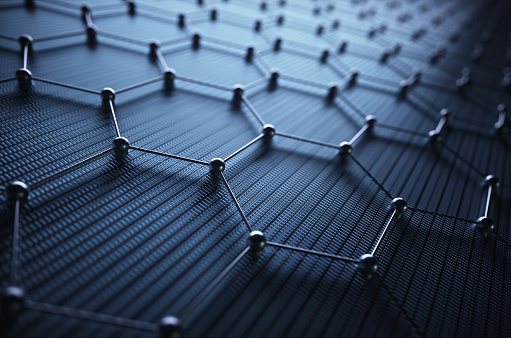
Scientists have recently discovered a new type of noise that can ionize the air around it. This noise, called “sonoluminescence,” is generated by an acoustic shockwave created by a loud sound. This shockwave is so powerful that it causes the air molecules around it to be ionized, producing a visible light. This phenomenon has a wide range of potential applications, from medical treatments to industrial processes. This discovery has the potential to revolutionize the way we think about noise and its effects.

Continue reading

A new trend is emerging in the classroom that has students, parents, and teachers all excited - video game-based learning! A team of researchers at the University of Illinois have developed a new way of teaching and learning that is engaging, interactive, and fun. Through their video game-based learning approach, students are not only learning the curriculum, but also skills such as problem solving, critical thinking, and collaboration. This innovative approach to learning has already shown great results in the classroom, with students becoming more engaged, motivated, and confident in their learning.

Continue reading

Kangaroo Island, located off the coast of South Australia, is now home to a new industry that is providing an unexpected key ingredient for a variety of beverages. Scientists from the Island have discovered a species of native shrub, the Grevillea pteridifolia, that is known for its distinctively sweet flavor. This flavor is now being used to produce a variety of drinks, including wines, beers, and ciders. By using this unique species as a key ingredient, Kangaroo Island is bringing a new and exciting flavor to the beverage market.

Continue reading

Scientists have recently made a breakthrough in fluorine-based drug synthesis, making it possible to create new molecules in less than a minute. This revolutionary process is a vast improvement over traditional methods, which can take up to a week to complete. This new method, dubbed “Lightning Fluorination” is set to revolutionize the pharmaceutical industry, speeding up the drug development process and potentially leading to new and improved treatments for a range of illnesses.

Continue reading

The use of cannabis for medicinal and recreational purposes is becoming increasingly popular around the world. While the psychoactive component of cannabis, THC, has been studied extensively, the effects of long-term THC consumption on cannabis smokers is still largely unknown. However, a new study from the University of California, San Diego suggests that regular THC consumption may have a positive influence on long-term cognitive performance. The study found that regular cannabis smokers who had been using THC for at least five years performed better on cognitive tests than those who had not used THC for the same amount of time.

Continue reading

Today, a major breakthrough in quantum computing has been announced. Scientists have developed a new qubit technology that is stable enough to be used for building a universal quantum computer. This new qubit technology has a long-term stability exceeding the current record by a factor of 10,000, making it a prime candidate for a universal quantum computer. This new qubit technology could revolutionize the world of quantum computing, as it has the potential to greatly improve the accuracy and speed of quantum computing.

Continue reading

Coral reefs are among the most diverse and important ecosystems in the world, providing habitat and protection for a range of species, including fish, crustaceans, and many other marine life. But coral reefs are also under threat due to climate change, pollution, and other human-induced activities. In a new study, researchers have found a way to help coral reefs stay healthy and resilient in the face of these threats. By revealing how corals ingest and interact with friendly algae, the research team was able to identify which species of algae are important for coral health and which are detrimental.

Continue reading

A historic moment is coming soon as Saudi Arabia is set to launch two of its astronauts into space on a private mission to the International Space Station (ISS). This marks the first time that the Kingdom of Saudi Arabia has sent astronauts into space, a milestone that is sure to propel the Kingdom into a new era of exploration. The mission, which is set to launch in 2023, will see two Saudi astronauts spend a week at the ISS, conducting scientific experiments and participating in educational outreach programs.

Continue reading

Today, history was made as the first African-American astronaut, Dr. Gertrude Jones, became the first person to experience the weightlessness of the moon! Dr. Jones was part of a team of astronauts that set out to explore the far reaches of space and discover new worlds. During the mission, Dr. Jones and her crew were able to experience the full weightlessness of the moon, something that had never been done before.

Continue reading

Recent research by scientists at the University of Adelaide has revealed that vinegar could be the secret ingredient in tackling the climate crisis. While vinegar has long been known as a great all-purpose cleaner, its potential to help reduce the global carbon emissions has only recently been discovered. Scientists have found that vinegar can be used to capture and store carbon dioxide from the atmosphere. The captured carbon dioxide can then be stored for long-term storage or converted into a usable form of energy.

Continue reading

In a major breakthrough, researchers have made headway in uncovering the mysteries of the ancient marine sediments in the Northern Polar region. By using a combination of in-situ sampling and cutting-edge analytical techniques, they have uncovered a wealth of information about the environment and climate of the era. For example, they discovered that the sedimentary rocks contained evidence of a warm climate, indicating that the area was once much warmer than it is today.

Continue reading

In science, mistakes are bound to happen. Even the most famous scientists have made errors in their work. In a recent study, researchers looked into some of the most famous scientific mistakes of the past hundred years. They found that most errors were due to a lack of experimental evidence or an incorrect interpretation of the evidence. The researchers also discovered that errors often resulted from a lack of communication between researchers, leading to a misunderstanding of the data.

Continue reading

A recent study using NASA’s soon-to-be-launched James Webb Space Telescope has revealed some exciting new insights into ancient galaxies. Astronomers from the University of Arizona used the telescope to observe two galaxies located 11 billion light-years away from us. The observations showed the galaxies to be surprisingly rich in dust and heavy elements, hinting at a much earlier period of star formation than previously thought. What this means is that these galaxies had already created a significant amount of stars and heavy elements before they even got to us.

Continue reading

Recently, a team of researchers has made an exciting breakthrough in understanding the complexities of ant neurochemistry. After studying the brains of ants, they have uncovered a series of signals that are responsible for the ants’ complex behavior. The team found that the ants use a series of chemical signals in order to communicate with each other and coordinate their actions. This has given us new insight into how ants function as an organized and efficient collective.

Continue reading

As our climate continues to change, researchers are looking for new ways to address the issue. A new study reveals a potential solution: microorganisms. The research, published in Nature Communications, reveals that certain species of microorganisms could be used to reduce the amount of carbon dioxide (CO2) in the atmosphere. By engineering these microbes to consume CO2, they could be used to reduce the amount of this gas in the atmosphere.

Continue reading

A new study from an international team of scientists has revealed how the aging of the intestine in fish can affect the entire organism. The study, published in Nature Communications, uses an innovative approach to study the impact of aging on the intestine of common carp. The findings of this study have far-reaching implications for the understanding of aging in living organisms, particularly those that are able to regenerate their intestines, such as fish.

Continue reading

The sweet tooth of humanity has been a part of our culture for centuries, but the source of our sweet treats are changing. Scientists have recently discovered a new type of sugar in the roots of some plants. This sugar, known as “rootsugar,” is naturally produced in the roots of certain plants such as beets, carrots, and turnips. While this discovery will not revolutionize the entire food industry, it could provide an alternative source of sweetness to those looking for a healthier or more natural option.

Continue reading

In a breakthrough study, scientists have demonstrated nonlocal effects in biexciton emission. Biexcitons are two-electron complexes created by the recombination of two excited electrons in a semiconductor material. They are of great interest to researchers due to their potential applications in quantum information processing and optoelectronics. Using a special type of photoluminescence spectroscopy, researchers at the University of Regensburg in Germany were able to observe nonlocal effects in biexciton emission. Nonlocal effects are a quantum phenomenon in which two particles interact without being in direct contact.

Continue reading

A new type of thin solar cells made of organic materials could revolutionize the way we generate energy. Researchers at the National University of Singapore have developed a two-dimensional (2-D) molecular ferroelectric thin film for use in thin-film solar cells. This new technology is made up of an organic molecule called ferroelectric azobenzene, which is both more efficient and less expensive to produce than conventional solar cells. The 2-D thin film is also flexible and lightweight, making it a great choice for portable devices.

Continue reading

Recent advancements in artificial intelligence (AI) are revolutionizing healthcare and the drug discovery process. AI technology is now being used to identify new drugs that are more effective, safer and more affordable than existing drugs. The advantages of using AI for drug discovery are numerous, and include faster drug development, improved drug safety, and reduced costs. AI can also be used to identify new drug targets and to design more personalized treatments for individual patients.

Continue reading

In a groundbreaking new study, researchers have successfully demonstrated the existence of a chiral liquid composed of non-Abelian anyons that can be used to store quantum information. These anyons, which are particles with special properties that are not found in regular matter, are believed to be the key to unlocking the potential of quantum computing. This new discovery could revolutionize the field of quantum computing, as it could be used to create powerful new systems that are more secure and efficient than existing technology.

Continue reading

Scientists have developed a new type of synthetic receptor that can be used to precisely control a cell’s activity. This breakthrough could have major implications for the development of new medical treatments, as it provides a way to target specific cell functions without the need for drugs. The synthetic receptor works by binding to molecules on the cell’s surface and triggering a response, such as activating a gene or blocking a signal.

Continue reading

3D printing is set to revolutionize a wide range of industries, from manufacturing to medicine. Now, researchers at the University of California, San Diego have developed a new 3D printing technique that can create ultrasmall metallic objects with unparalleled precision. The technique, called 3D electrohydrodynamic lithography (3D-EHDL), uses an electric field to precisely deposit nanoscale droplets of metal inks onto a substrate. The resulting objects can be as small as 25 nanometers, and they can be produced in high volumes with great accuracy.

Continue reading

A recent study carried out by scientists from Estonia has revealed an exciting new potential treatment for Lyme disease. By utilizing local herbs found in the area, researchers have discovered a mixture of three herbs that could potentially reduce the symptoms of Lyme disease. The herbal combination consists of burdock root, elderberry flower, and St John’s wort, and has been found to reduce symptoms such as fatigue and joint pain. This new herbal treatment could be a major breakthrough in the fight against Lyme disease.

Continue reading

Recently, a team of researchers from the University of California, Berkeley have developed a machine learning approach that can give teachers and researchers insights into the entire class, rather than just a few select students. This approach, which was recently published in the journal PLOS ONE, uses machine learning to analyze student data from the classroom and suggest strategies for improving student performance. The research team tested their approach on over 3,000 students in the United States and found that the machine learning approach was able to accurately identify which strategies would be most effective for each student.

Continue reading

Author's picture

Elizabeth Dubinskiy

I am high school student with a passion for materials science and engineering. Using this blog I would like to share my research and findings.

High School student

San Francisco Bay Peninsula