It has been recently discovered that a giant moon is orbiting a distant planet known as HR 5183 b. This moon is estimated to be about half the size of the planet it orbits and appears to be the largest moon ever discovered outside of our own Solar System. What makes this moon so unique is that it is located in a system known as a “hot Jupiter,” where the planet is very close to its star and is likely to be tidally locked to its star, meaning that one side of the moon always faces the planet and the other side always faces the star.
In a surprise move, the Russian space agency, Roscosmos, announced today that it will be performing an emergency maneuver for its Luna 27 mission to the Moon. This maneuver is scheduled to take place this Saturday, August 23rd, and will bring the spacecraft into a closer orbit around the Moon. This unprecedented maneuver is a response to an unexpected technical issue with the spacecraft’s propulsion system that was discovered earlier this week.
Russia is making plans to launch a robotic mission to the Moon in 2023, which will mark the first time a Russian probe has been sent to the Moon since the 1970s. The mission, known as Luna-25, will be launched from the Baikonur Cosmodrome in Kazakhstan and is intended to explore the Moon’s south pole. Luna-25 will carry a variety of instruments to study the lunar surface, including cameras, spectrometers, and radiation detectors, as well as a drill to take samples from the lunar regolith.
A new study has found a way to put animals into a brief, hibernation-like state using ultrasound. Scientists from the University of Tsukuba in Japan have developed a technique that can induce a state of inactivity in mice by using focused ultrasound waves. The ultrasound waves caused the mice to enter a state of suspended animation for several minutes, during which they had reduced heart rates and respiration, and their body temperatures dropped significantly.
Graphic novels are rapidly becoming popular tools for teaching math and physics. In recent years, more and more educators have been turning to these engaging stories to help their students understand the complex concepts of mathematics and physics. A new study has found that students who read graphic novels to supplement their education in math and physics achieve higher grades and better understanding of the material than those who don’t.
As the pandemic continues to disrupt medical education, remote learning has become a valuable resource for medical students. A recent study conducted by the American Association of Medical Colleges (AAMC) found that remote learning has allowed medical students to stay on track with their studies, even as they face new challenges.
The AAMC study, which surveyed over 2,000 medical students in the United States, found that remote learning has become an indispensable tool for medical students during the pandemic.
The Hubble Space Telescope has just released an incredible image of a cosmic cluster located in the constellation of Cassiopeia. The cluster is composed of about 100 stars and is known as the “Twin Jet Nebula”. The Twin Jet Nebula is the result of two powerful jets of gas and dust expelled by a young star at its center. The jets are shaped like two distinct “arms” which extend outward from the star, creating a butterfly-like structure.
Recently, a team of researchers has been conducting preclinical trials to test the benefits of platelets for therapeutic applications. Platelets are a type of cell found in the blood that are important for clotting and wound healing. The studies have shown that platelets can be used to successfully treat certain types of cancer, reduce inflammation, and even help to repair damaged tissue. The team is hopeful that the success of these trials will pave the way for more effective treatments for a variety of diseases.
Today, a new piece of archaeological evidence has been uncovered in the form of a series of ancient inscriptions. The inscriptions, believed to date back to the 4th century BC, appear to be written in a form of ancient Greek and contain references to some of the earliest known anarchist movements. The inscriptions, which are written in a poetic form, describe a “filthy and immoral” group of people who were, in their own words, “totally free from the constraints of a state”.
In a recent breakthrough, scientists have successfully reconstructed a patient’s pink noise using brain data. This landmark achievement could have significant implications for brain-machine interfaces, with the potential to help people with movement disorders or paralysis. According to the study, this is the first time a patient’s brain signals have been used to reconstruct pink noise, a type of sound commonly used in medicine to help diagnose hearing impairments. The team used a combination of advanced brain imaging techniques and machine learning algorithms to accurately reconstruct the sound.
Ning Chen, a professor at Beijing University, is making waves in the scientific community with his recent announcement that he has discovered a new form of superconductivity. Superconductivity is a phenomenon in which materials can conduct electricity and heat with zero resistance. This discovery could revolutionize the way we use electricity and enable energy to be transferred more efficiently. Professor Chen’s research has revealed a new state of superconductivity, known as “LK99”, which uses liquid helium as a cooling agent.
With the rapid rise of antimicrobial resistance, an innovative solution has emerged in the form of low-tech sludge. Sludge is a by-product of wastewater treatment, and it has been found to potentially reduce the spread of antibiotic resistance. Researchers from the University of Exeter have found that adding sludge to wastewater treatment processes can reduce the presence of antibiotic-resistant genes and thereby combat the spread of antimicrobial resistance. This low-cost solution has the potential to save lives and protect public health.
The future of chemical production is looking brighter and more sustainable than ever before. A recent research project has proposed a new approach to chemical production that could revolutionize the way we produce chemicals, reduce our reliance on finite resources, and decrease our environmental impact. The research team, from the University of Cambridge, have identified a strategy that could enable chemical production with just a fraction of the energy and resources currently needed.
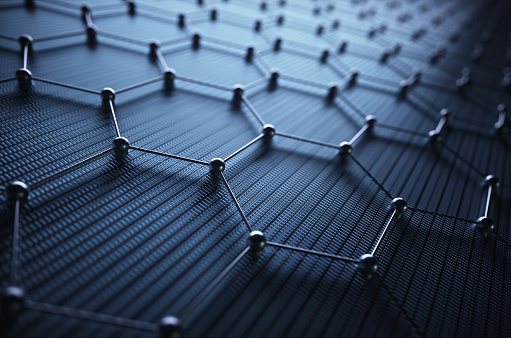
Have you ever seen a graphene macrostructure? Chances are, you haven’t. Graphene macrostructures are the largest structures made of graphene, a single layer of carbon atoms arranged in a hexagonal lattice. They have many potential applications, such as in electronics, energy storage, and biomedical devices, but until now, there has been no efficient way to create them.
However, scientists at the Korean Advanced Institute of Science and Technology have recently developed a new method for creating large scale graphene macrostructures.
Scientists have made a major breakthrough in optimizing the trajectory for exploration of the Jovian system. By applying advanced optimization techniques to the problem of navigating the complex gravitational environment of the Jovian planets, researchers have developed a new approach to optimizing spacecraft trajectories. This new method could enable more efficient and cost-effective exploration of the Jovian system.
The study takes a novel approach to trajectory optimization that combines the latest advances in optimization theory with recent developments in artificial intelligence.
NASA’s Psyche mission is about to embark on a groundbreaking journey to a unique metal world, and it’s set to revolutionize our understanding of the Solar System. This mission is set to explore a metal-rich asteroid called Psyche, located in the main asteroid belt between Mars and Jupiter. Psyche is thought to be the remnant core of a protoplanet, providing a unique insight into the formation of our Solar System. The mission will use a combination of remote sensing and on-site exploration to study the asteroid’s structure, composition, and origin.
In the world of physics, the concept of ergodicity has been around since the early 19th century. It is the idea that a system’s behavior can be accurately predicted based on a few simple rules. This concept has recently been revisited and researchers have found that ergodicity is more complex than originally thought and may hold the key to unlocking a greater understanding of the universe. In this article, we’ll explore what ergodicity is and what it could mean for physics.
Greenpeace has recently slammed Poland for passing a law which allows the country to reduce water flow in the Vistula River. The environmental organization is concerned that this could have a devastating effect on the already endangered species in the river, such as fish, mollusks, and amphibians. The law states that the water flow can be reduced by up to 50% in the summer and autumn, which could have a serious impact on the river’s eco-system.
Scientists have recently discovered a groundbreaking new way to harvest power. They have developed a nonlinear circuit that can harvest power from a variety of sources, including light, thermal gradients, and even sound. This discovery could revolutionize the way we power our devices, from cell phones to machines, and has the potential to provide a much more reliable and cost-effective energy source. The circuit is able to capture energy from a variety of sources and store it in a capacitor, which can then be used to power a device.
A revolutionary new form of immunotherapy has been developed that could potentially allow the body to fight off cancerous cells without the use of toxic treatments. Researchers have successfully created artificial antibodies made from DNA, providing the potential for a powerful new way to fight cancer. These artificial DNA antibodies, known as aptamers, are able to detect cancer cells and bind to them, triggering an immune response that can fight off the cancerous cells.
The tech industry is booming and there is no sign of it slowing down. As a result, more and more people are looking to break into the industry and gain the skills and knowledge they need to succeed. Bootcamps have become increasingly popular as a way for people to jumpstart their tech careers and fast-track their learning. Bootcamps provide an intensive, immersive learning experience, typically lasting between 8 and 12 weeks.
A new study published by a team of international researchers has revealed that agriculture is the primary source of phosphorus in lakes and streams. This is a concerning revelation, as phosphorus is a major pollutant of freshwater ecosystems, which can lead to harmful algae blooms and decreases in water quality. The research team analyzed data from multiple sources to identify the sources of phosphorus, and their findings indicate that agricultural activities are the main driver of phosphorus input, with fertilizers, feedlot runoff, and animal waste all contributing to the problem.
Recently, researchers in Japan have made a breakthrough in their study of hereditary diseases in humans: they have successfully used Japanese squirrels to help model the effects of certain genetic diseases. By studying the squirrels, the researchers have been able to gain an insight into the genetic changes that can occur in humans, and the potential treatments for these diseases. The researchers are hopeful that this research will lead to better treatments and eventually a cure for these diseases.
A new study has found that large livestock farms may be contributing to the spread of antimicrobial resistance. The study, conducted by researchers at the University of Copenhagen, focused on pigs on large farms in Denmark, and found that resistance to certain antibiotics increases in these animals when they are exposed to high levels of antibiotic use. The researchers suggest that this may lead to an increased risk of antibiotic-resistant bacteria in the environment, which can then be passed on to humans.
A new discovery by scientists at the University of Cambridge may revolutionize the world of semiconductors. In a breakthrough study published in Nature Materials, the team has developed a two-dimensional metal semiconductor. This new semiconductor has the potential to expand the capabilities of existing technologies, such as solar cells, LED displays, and transistors.
The new semiconductor is created by combining two-dimensional metal films with other materials. The combination of these materials creates a semiconductor with a band gap, which is a key feature of semiconductors.