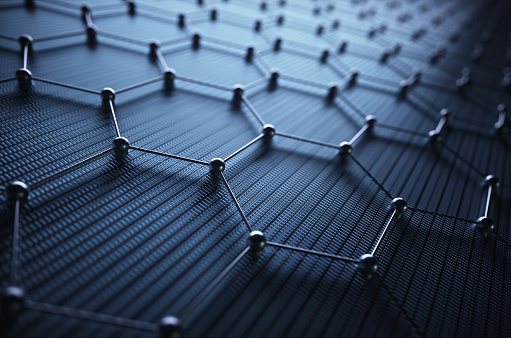
In a recent breakthrough, a team of scientists have developed a device based on the superconducting diode effect. This device could revolutionize the way we use energy, by allowing for energy to be used more efficiently and with less losses. The new device harnesses a property of superconductors known as the diode effect, which allows them to act as a one-way gate for electricity, preventing it from flowing in the opposite direction.

Continue reading

Recent research has revealed that viruses may be able to use molecular fibers to transport their genetic material. This exciting discovery could be a game-changer in the world of biotechnology, as it could potentially lead to new ways to fight viral diseases and even improve gene therapy. This discovery was made by scientists from the University of California, San Diego, who used a technique known as single-molecule force microscopy. This technique enabled them to observe the movement of viruses and the fibers they used.

Continue reading

A recent study has found that female barn swallows are more likely to prioritize mating with males that can provide them with higher quality nests. Researchers from the University of Liverpool studied the mating habits of barn swallows in the UK, and found that females were more likely to mate with males who had better nest-building skills. This suggests that female barn swallows are able to recognize which nests are of higher quality and prioritize mating with the males that can provide them with those nests.

Continue reading

In a groundbreaking discovery, researchers have discovered a way to generate cheap and sustainable energy using graphene. Graphene is a single layer of carbon atoms arranged in a hexagonal honeycomb lattice and has the potential to revolutionize the way energy is generated. The research team has developed a method to create a special type of graphene that can be used to generate electricity more efficiently. This new graphene-based technology has the potential to reduce the cost of energy production, while also reducing the environmental impact of energy production.

Continue reading

In a recent breakthrough, researchers have used artificial intelligence to successfully predict rice yields. The team of scientists developed a deep learning model that uses satellite imagery to accurately forecast crop yields. This model can significantly improve the accuracy of crop yield predictions, which is crucial for agricultural production. The model could be used to better manage resources and improve the efficiency of farming operations. This could have a major impact on global food security, as well as reducing the costs of crop production.

Continue reading

As the world continues to face an ever-worsening climate crisis, it’s becoming increasingly important to find cost-effective solutions that can help reduce emissions and energy use. One such solution is the concept of “day plus night cooling”, which combines traditional air conditioning technology with nighttime cooling strategies. This strategy involves using the cooler night air to help cool a building during the day, reducing the amount of energy that needs to be consumed to keep the building at a comfortable temperature.

Continue reading

In a groundbreaking new study published this month, researchers have discovered that knowledge blocks are just as important as words when it comes to language learning. Knowledge Blocks, or KBs, are chunks of knowledge that are used to construct sentences and communicate information. The researchers found that KBs are used in language learning as a way to make connections between words and ideas, and are key in allowing us to express ourselves and understand the world.

Continue reading

In a world where climate change and rising food insecurity have become an ever-growing problem, a group of scientists has developed an innovative new solution. By combining solar energy with advanced irrigation methods, they have created a system that could revolutionize the way small-scale farmers access water. This breakthrough technology could be a game-changer for small farmers in rural areas, giving them an easy and efficient way to access the water they need for their crops.

Continue reading

India has made history today by launching its first ever mission to the moon, and at a fraction of the cost that other countries have paid. The Indian Space Research Organization (ISRO) successfully launched its Chandrayaan-2 mission from the Satish Dhawan Space Centre in Sriharikota, India. This mission marks India’s first lunar mission in over a decade, and is the first time an Indian mission has attempted a soft-landing on the lunar surface.

Continue reading

Today marks a historic day in India’s space exploration journey. The Indian Space Research Organisation (ISRO) has announced a significant cut in the price of its first mission to the moon. This mission, called Chandrayaan-2, will be the first Indian mission to explore the moon’s south pole. The mission will be a landmark for the country as it will be the first time India has sent a spacecraft to the moon’s surface.

Continue reading

India is set to become the first country in the world to explore the south pole of the Moon. The Indian Space Research Organisation (ISRO) announced that the Chandrayaan-3 mission, scheduled for launch in November 2023, will explore the south pole region of the Moon. This mission marks an important milestone in India’s space exploration journey, as the south pole of the Moon has never been explored before. The Chandrayaan-3 mission will be India’s third lunar mission, and will be undertaken in collaboration with the European Space Agency (ESA).

Continue reading

Today, NASA announced that the launch of their newest space telescope, the Roman Space Telescope, has been delayed until 2023. This telescope, which will launch from Florida, will provide the most detailed view of the universe yet. Scientists are eager to get their hands on the data generated by the telescope, which will help us better understand the formation of the universe and the evolution of galaxies. The telescope will look back in time up to 10 billion years, and its powerful optics will allow it to spot objects up to a billion times fainter than can be seen with the naked eye.

Continue reading

Today marks a historic moment for space exploration as the launch of the Psyche spacecraft from the Kennedy Space Center in Florida marks the first mission to explore an asteroid. The Psyche spacecraft, designed and developed by NASA, will explore the metal-rich asteroid 16 Psyche, located in the asteroid belt between Mars and Jupiter. This is the first time a spacecraft has ever been sent to explore an asteroid of this metal composition.

Continue reading

The Parker Solar Probe is about to embark on an ambitious mission, and it’s headed to Venus. On August 20, 2023, the probe will fly past Venus as part of a gravity assist maneuver to help it reach its final destination: the sun. This flyby will be the closest ever, coming within just 250 kilometers of the planet’s surface. The maneuver will dramatically increase the probe’s speed, allowing it to reach the sun in less than a year.

Continue reading

It’s no secret that silicon-based devices are essential components of modern electronics. In a breakthrough study, researchers have made a major stride in advancing the efficiency of these devices. Using a new method of combining several layers of silicon, they’ve demonstrated that it’s possible to create highly efficient transistors that are both cheaper and more energy efficient than ever before. This could lead to faster and more powerful electronic devices that can outpace current technology.

Continue reading

A recent discovery from an international team of astronomers has uncovered evidence of carbonic acid in interstellar space. This marks a major breakthrough in our understanding of our universe and could lead to further insights into the formation of complex molecules. The discovery was made by studying the light emitted by a stellar object located in the constellation of Sagittarius. The team observed an absorption of infrared light at a wavelength of 3.

Continue reading

As the effects of climate change continue to worsen, coral reefs around the world are at risk of being lost forever. In an effort to protect these fragile ecosystems, researchers at the University of Washington have developed an innovative new method of creating ice-free reefs. The method is designed to help coral reefs survive in warmer temperatures and provide a more sustainable ecosystem for future generations. The new technique involves using a combination of artificial reefs and temperature-regulated coral nurseries to create a more resilient and climate-tolerant environment.

Continue reading

A recent development in North Korea is raising eyebrows around the world. On Wednesday, August 19th, North Korea launched a rocket that many believe to be a spy satellite. This is the second such launch in the past two months, and it is a clear indication that the country is continuing to pursue its ambitious space program. The launch has been widely condemned by the international community, with some countries expressing concern that the satellite could be used for military purposes.

Continue reading

The James Webb Space Telescope (JWST) is about to begin its groundbreaking survey of the universe, and the results promise to revolutionize our understanding of the cosmos. The telescope is set to launch in 2023 and will be the most powerful space observatory yet, allowing scientists to peer deep into the past and observe galaxies and stars that are otherwise too faint and distant to be seen from Earth. With its unprecedented resolution and sensitivity, the JWST will provide unprecedented views of our universe, giving us a better understanding of its history and evolution.

Continue reading

A new study provides promising evidence that non-coding DNA, which makes up the majority of the genome, can explain the heritability of dairy traits in dairy cattle. Researchers from the University of Illinois leveraged the data from the Global Dairy Gene Map to look at the relationship between non-coding DNA and the heritability of traits related to dairy production. The results of their study, published in Genome Biology, indicate that non-coding DNA can explain a substantial portion of the heritability for milk production, fat, and protein.

Continue reading

Russia and China have declared an official partnership in space exploration, a move that could have far-reaching implications for the future of space exploration. The two nations have agreed to collaborate on a wide range of projects, from joint research and development, to joint space missions, to joint planetary exploration. It is the first time two of the world’s leading space powers have agreed to a formal partnership. This week, Russian and Chinese officials announced that they have officially declared a strategic partnership in space exploration.

Continue reading

Scientists have successfully sequenced the entire human chromosome 3, an important milestone in understanding the human genome. This is the first time a single chromosome has been fully sequenced, and while the chromosome only makes up a fraction of the entire human genome, it provides important insight into the genetic structure of our species. Researchers at the University of California, San Francisco, used advanced sequencing techniques to map out the entire chromosome, which contains over 200 million base pairs of DNA.

Continue reading

Scientists have recently revealed an incredible breakthrough: a fish that can actually change color! This species of fish, called a chromis, has the remarkable ability to change its color in response to its environment. This ability, which scientists are still trying to understand, could be incredibly useful for marine biologists studying the behavior of different species of fish. It could also be used to study the effects of climate change on marine life, as well as many other applications.

Continue reading

A new study has revealed that tuberculosis transmission between wildlife and cattle is a significant problem in parts of Africa. Researchers from the University of Liverpool have found that the disease can be passed between animals living in the same area, with the risk being highest when the two species live in close proximity. The study also revealed that the transmission is particularly high in areas where there is a high density of wildlife, such as national parks.

Continue reading

A team of researchers have recently discovered evidence of gamma-ray emission in a young, Sun-like star, a finding that could revolutionize our understanding of how stars form. The team, led by Dr. David M. Smith of the University of California, San Diego, used a telescope aboard the International Space Station to observe the star, named HD 142527, located 450 light-years away in the constellation Lupus. Their findings suggest that the gamma-ray emission is generated by a powerful process known as proton-proton collisions, which takes place in the star’s core.

Continue reading

Author's picture

Elizabeth Dubinskiy

I am high school student with a passion for materials science and engineering. Using this blog I would like to share my research and findings.

High School student

San Francisco Bay Peninsula