The future of precision therapies is on the horizon, and light-controlled drugs may be the key to unlocking it. A recent study published in the journal Nature Materials has found that light-activated drugs can be used to control the activity of certain cells, allowing for a more precise way of delivering treatments. This breakthrough could revolutionize the way doctors treat diseases, as it would allow them to precisely target specific cells while avoiding off-target effects.

Continue reading

Scientists have recently discovered the secrets of polydopamine coatings, and the findings could revolutionize the way we use this material. Polydopamine coatings have been used to protect and coat surfaces for years, but scientists have now been able to unlock their full potential. By studying the chemical structure of polydopamine coatings, researchers have been able to create a process that allows for custom-made coatings that can be tailored to specific needs.

Continue reading

The potential of photonics and electronics to revolutionize the computing industry is now a reality. A team of researchers from The Chinese University of Hong Kong (CUHK) has developed a new type of memristive device, called a tunable-reconfigurable photoresponse device, that has the potential to be a game-changer. This new device can be used to control the photoresponse behavior of a photonic device, allowing for more efficient and faster operation. The team has demonstrated the device’s capabilities in a proof-of-concept system and is confident that it can be used to greatly enhance the performance of photonic systems.

Continue reading

In a recent study, scientists have discovered the key to unlocking a new method of studying interfacial electrochemistry. By utilizing a “curtain” of electrolyte solution, the scientists were able to observe the electrochemical reactions taking place at the interface of two solutions. This new technique could revolutionize the way we study electrochemistry, and could potentially lead to new breakthroughs in the field. The curtain of electrolyte solution acts as a barrier, allowing researchers to observe the electrochemical reactions in detail.

Continue reading

Today, scientists have demonstrated the frustrated ferromagnetic transition in AB-stacked honeycomb lattices, a new type of two-dimensional magnetic material. This transition is a type of magnetic ordering that occurs when multiple spins interact with each other in a way that frustrates the system. The researchers believe that this finding could lead to the development of new materials with unique physical properties. This discovery could have a huge impact on the field of magnetism and could lead to the development of new materials with unique properties.

Continue reading

In a groundbreaking study, researchers have developed a material made from 2D molybdenum disulfide that can selectively target and kill cancer cells. This material, when combined with a virus, has been shown to effectively eliminate cancer cells without affecting healthy cells. The material is able to recognize and attach to the surface of cancer cells, allowing it to carry the virus and deliver it directly to the affected cells. This could lead to a non-invasive and targeted form of cancer treatment that could significantly reduce the risk of side effects.

Continue reading

In a recent breakthrough, scientists have developed a new way to synthesize and functionalize noble metal nanocrystals with organic materials. This groundbreaking technique could lead to a range of new applications, from medical imaging to optoelectronics. The team used a novel approach to attach organic molecules, such as dyes, to the surface of gold, silver, and platinum nanocrystals, allowing them to be used in a variety of ways. This is the first time this has been done on such a small scale, and the results could revolutionize the way we use nanocrystals.

Continue reading

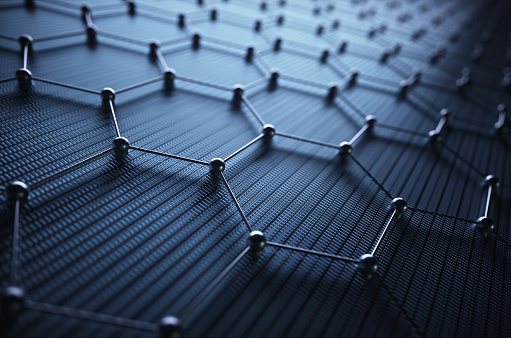
Scientists have recently uncovered a new property of graphene, a material made of a single layer of carbon atoms arranged in a hexagonal pattern. It has long been known that electrons in graphene behave super-smoothly, but a recent experiment has revealed that they can actually behave like a fluid at nanometer scales. This new discovery could have implications for the development of new electronics and computing devices. Researchers believe that this fluid-like behavior of electrons could enable ultra-fast data processing and energy transfer, paving the way for future technologies.

Continue reading

Today, scientists have made a tremendous breakthrough in the field of genomics: they have developed software that can generate full human genome sequences on demand. This technology is a game-changer for researchers and clinicians, as it eliminates the need for expensive sequencing equipment, and allows them to generate a complete and accurate human genome sequence in a matter of minutes. This new software not only simplifies the process of generating a genome sequence, but also makes it more accurate and cost-effective.

Continue reading

Today marks a groundbreaking moment in the world of scientific research: the successful assembly of an entire genome using a machine. The achievement, accomplished by a team of researchers from the University of California, Berkeley, marks an incredible advancement in our understanding of genome sequencing. This development could have far-reaching implications for the study of genetic diseases, evolutionary biology, and much more. Not only does this breakthrough allow for more accurate genome sequencing, but it also offers the potential for increased speed and efficiency in mapping genomes.

Continue reading

Writing about the universe and its mysteries is truly fascinating. Recently, astrophysicists have made a groundbreaking discovery that has brought us one step closer to understanding the universe’s structure. Through the use of computer simulations, astronomers have found that shockwaves, which are caused by massive galactic collisions, can produce ‘polarized shocks’ that can create a cosmic web-like structure throughout the universe. Polarized shocks are powerful and can cause a dramatic rearrangement of matter, which can create a web-like pattern that is similar to a spider’s web.

Continue reading

A new discovery by scientists has opened the door to a potential breakthrough in the fight against deadly viruses. A newly discovered strain of bacteria has been found to be highly resistant to a variety of viruses, and may provide a reliable defense against future viral outbreaks. The study, published in the journal Nature Communications, revealed that this strain of bacteria has an incredibly strong defense system, which makes it difficult for viruses to penetrate and infect the cells.

Continue reading

Today, a new study published in Nature Communications reveals a previously unknown process that could help to explain how certain genes are switched on in specific types of cells. Scientists have discovered a new form of gene regulation called cyclic RNA, which affects the expression of certain genes in different cell types. Cyclic RNA is a self-renewing cycle of gene expression that is specific to certain cell types, allowing them to express different sets of genes.

Continue reading

A new study by researchers at the Norwegian Meteorological Institute has quantified the global impact of electricity-generating storms. The study found that these storms, known as thunderstorms, generate more electricity than all of the world’s power plants combined. The researchers used a combination of ground-based observations and satellite data to determine the amount of electricity produced by thunderstorms around the world. They found that thunderstorms are responsible for an estimated 10,000 terawatt-hours of electricity each year, which is more than double the output of all the world’s power plants.

Continue reading

In a groundbreaking new study, scientists from the University of Texas at Austin have developed a new AI-powered microscope that can track and analyze the movement of individual cells in real-time. This new microscope, which uses advanced AI technology, is able to detect and analyze the behavior of cells with unprecedented accuracy and speed. The microscope is capable of recognizing different types of cells, such as bacteria and human cells, and is able to track their movement over long distances and in different environments.

Continue reading

Nanoparticles have been proposed as a new way to enable ultralong-distance communication between two counterpart devices. A team of researchers from the University of Science and Technology of China has developed a new approach using a single nanoparticle to enable the interaction of two devices over a distance of more than a kilometer. The team’s research has shown that nanoparticles can be used to bridge the gap between two devices, allowing them to communicate over long distances.

Continue reading

Recently, scientists have discovered that puppies can spontaneously imitate human actions and gestures. In a study conducted by the University of Padova and the University of Milan, researchers found that puppies were able to imitate human actions, even when these behaviors had no direct relevance to their own species. This suggests that canine behavior is not simply a product of their environment, but may also be influenced by their ability to spontaneously imitate humans, a behavior which appears to be instinctive.

Continue reading

Today marks the 10th anniversary of the Chelyabinsk meteorite, a remarkable event that occurred on February 15th, 2013. The meteorite, estimated to be about 17 meters in diameter, exploded in the atmosphere over Chelyabinsk, Russia, releasing around 500 kilotons of energy - more than 20 times the energy released by the Hiroshima atomic bomb. The explosion created a shock wave that shattered thousands of windows, damaged buildings, and injured over 1,500 people.

Continue reading

Nanowires have become one of the most promising platforms for exploring the properties of Majorana particles, which are particles that are their own antiparticles and could be used for quantum computing. Recently, researchers have developed a new approach for using nanowires to detect Majorana particles. This approach involves using a combination of electric and magnetic fields to induce a Majorana state in a short nanowire, making it much easier to detect the particle.

Continue reading

Scientists have a rare opportunity to study an asteroid in our solar system. In 2023, an asteroid named 99942 Apophis will fly past Earth, giving astronomers the chance to observe this mysterious space rock up close. Not only will this be the closest approach of an asteroid of this size in recorded history, but scientists will also use the opportunity to test out a new technique for deflecting asteroids away from Earth.

Continue reading

Today, scientists have announced a breakthrough technique for manipulating mitochondria, the powerhouse of cells. Mitochondria are responsible for producing energy that is essential for multicellular life. This new method offers a way to control mitochondrial activity, with profound implications for the treatment of diseases associated with mitochondrial dysfunction. The technique is based on a new approach to manipulating the levels of proteins involved in mitochondrial energy production. By altering the levels of these proteins, researchers can modulate mitochondrial activity and its associated function.

Continue reading

Astrophysicists have recently made an incredible discovery: an explosion in space, unlike anything ever seen before! This mysterious phenomenon was discovered by a team of researchers using the Very Large Telescope in Chile. They determined that the explosion was a result of a star being torn apart by a supermassive black hole. While this type of event has been theorized since the 1970s, this is the first time an actual observation has been made.

Continue reading

A new study has revealed that adding antioxidants to cell cultures used in production can improve the quality of the products produced. Researchers from the University of British Columbia demonstrated that cultures with antioxidants had improved performance in terms of growth and yield. The team discovered that antioxidants were effective in reducing the amount of toxic byproducts that can form during the production process. These byproducts can reduce the quality of the products, but with the addition of antioxidants, the products had improved quality.

Continue reading

Today, researchers at the University of California, San Francisco announced their discovery of a new, bulk gluten-free fiber supplement. This supplement, known as GlutenX, is made from a combination of plant-based fibers and may provide an alternative to traditional gluten-containing grains. The supplement also contains beneficial dietary fibers, including inulin, beta-glucan, pectin, and guar gum. Researchers are hopeful that this new supplement may provide a variety of health benefits, including improved digestive health, increased nutrient absorption, and improved blood sugar control.

Continue reading

In an effort to help those struggling to pay off medical debt due to the COVID-19 pandemic, a new fund has been created to provide relief. The COVID-19 Medical Debt Relief Fund, which was announced this week, is a joint effort between the American Medical Association (AMA) and nonprofit RIP Medical Debt. The Fund will provide financial assistance to individuals and families struggling to pay off medical debt incurred during the pandemic.

Continue reading

Author's picture

Elizabeth Dubinskiy

I am high school student with a passion for materials science and engineering. Using this blog I would like to share my research and findings.

High School student

San Francisco Bay Peninsula