A new study has revealed that exposure to certain chemicals found in both cigarette smoke and industrial air pollution can lead to damage in our DNA. Scientists at the University of Southern California (USC) found that long-term exposure to both tobacco smoke and a common industrial compound called acrolein can lead to DNA damage in the form of methylation. Methylation is a process by which a cell can control gene expression, and when it goes wrong, it can lead to diseases such as cancer.
In a breakthrough study, researchers have demonstrated a new method of cooling electronics to below -150°C, a temperature never before achieved. This new technology, known as DeepFreeze, has the potential to revolutionize computing, allowing for the production of supercomputers that are faster, more energy-efficient and capable of running complex quantum industrial processes. With DeepFreeze, electronics can be cooled to temperatures far below those achieved with traditional cryogenic cooling methods, potentially enabling greater processing power and new opportunities for computing.
As climate change continues to cause droughts in many areas of the world, it is increasingly important for communities to develop user-friendly, inexpensive techniques to manage the impacts of these droughts. A new study from researchers at the University of California, Davis, has identified several methods that could be used to help small-scale farmers and other communities better manage the impacts of droughts. The researchers found that using cover crops, water harvesting and water conservation techniques, and low-cost irrigation systems can help communities better manage their water resources and reduce the impacts of drought.
Recently, a new methodology for developing anti-Markovnikow products has been developed by experts in the field of mathematics and applied computational methods. This method offers an efficient way to create products that can overcome the limitations of the Markovnikow model, which has been widely used in the past for modeling and analyzing complex dynamic systems. According to the authors, their method allows for the creation of models that are able to capture the full dynamic range of a system and can be applied to a variety of domains.
Are you fascinated by the possibility of discovering a new planet? Well, get ready to be amazed! Scientists have recently developed a new approach to find a planet that differs from the traditional methods. This groundbreaking new method may revolutionize the way we search for planets outside our solar system.
Using this unconventional approach, researchers have been able to detect a distant planet that has a mass that is three times that of Jupiter!
Scientists have long been puzzled by the huge variety of sizes of DNA molecules, but new research from an international team of scientists has finally provided an explanation. After studying thousands of different species of organisms, from bacteria to humans, the team discovered that the size of DNA is directly related to the complexity of the organism. The more complex the organism, the larger the DNA molecule. This could explain why humans have so much more DNA than simpler organisms like bacteria.
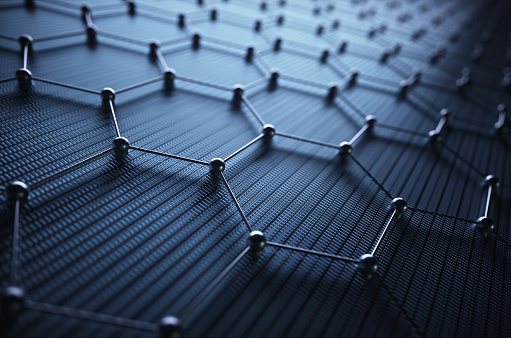
Researchers from the Institute of Materials Science of Barcelona (ICMAB-CSIC) have made an exciting discovery in the field of superconductivity: the use of graphene bilayers could potentially be used to boost superconductivity in certain materials. By applying an electric field to a bilayer graphene sample, the researchers were able to observe a significant increase in superconductivity. This discovery could lead to a new generation of high-temperature superconductors, as well as other applications such as energy storage and quantum computers.
A meteorite crater has been discovered in a French winery, making it the first such crater to be found in the country! The crater measures 18 meters in diameter and is believed to have been created by a meteorite impact some 140 million years ago. The meteorite most likely landed in shallow water, leaving a crater-like depression in the landscape that has been preserved over time. Scientists believe this is the first crater of its kind to be discovered in France, and possibly in all of Europe.
In a new study published in the journal Science Advances, researchers have used genomic data to reveal the origins and spread of tuberculosis (TB) among ancient Andeans. By analyzing ancient DNA from two individuals who lived in the region more than 1,200 years ago, the team has provided new insights into the history of the disease in the Americas.
Recently, an international team of researchers have uncovered new and exciting information about the history of tuberculosis (TB) in the Andean region.
Physicists are giving the law of thermodynamics a makeover! The law of thermodynamics is one of the most important laws of physics and governs the behavior of energy in a system. It states that energy can neither be created nor destroyed and is conserved over time. Recently, researchers have been exploring ways to extend this law by adding a new parameter, known as “entanglement”, to the equation. This would allow them to better understand the behavior of heat and energy on a quantum level.
Today, scientists have announced the development of a new plasma generator, capable of producing a gigajoule of energy per turnover. This breakthrough has the potential to revolutionize the way we generate power, as the generator requires no fuel and produces no harmful emissions. The plasma generator works by using two electrodes to create a magnetic field which generates the plasma. This plasma is then collected and stored in a containment vessel.
We have exciting news: a new type of electronic nose is being built with sustainably sourced materials! This nose has the potential to revolutionize the way we detect and measure odors and gases. By harnessing the power of naturally occurring materials such as fungi and bacteria, this electronic nose could be the key to more accurate, efficient, and cost-effective odor and gas detection. This could be a major breakthrough for a range of industries, from food production to environmental monitoring.
Recently, researchers have discovered a way to use antibiotics to improve the quality of soil for livestock. This groundbreaking technique could revolutionize the way farmers care for their animals and crops. The process involves adding antibiotics to the animal dung and composting it into the soil. This creates an environment where beneficial bacteria can thrive and prevent the growth of harmful bacteria, creating healthier and more productive soils. The technique could also help reduce the use of harmful fertilizers and potentially reduce the environmental impact of livestock farming.
Aquaculture, the farming of aquatic organisms, is becoming increasingly important as global fish stocks continue to decline. A new study published in Science Advances has revealed the potential ways aquaculture can benefit the environment, from reducing carbon emissions to improving water quality. The study found that aquaculture can help to protect coastal ecosystems, reduce the pressure on wild fisheries, and provide more food security. It also revealed that aquaculture can reduce the demand for fertilizers and other pollutants, and can help to improve water quality by providing an alternative nutrient source for aquatic organisms.
Recent research has revealed a new way to help identify the most promising solar cell materials: color coding. By using a technique called atomistic computer modeling, researchers from the University of Colorado Boulder were able to assign specific colors to different solar cell materials to make it easier to identify good candidates for solar energy conversion. This technique could help scientists and engineers save time by quickly and efficiently identifying the best materials for solar energy devices.
A new study has found that treating rice plants with iron could significantly boost the plants’ immunity to disease. The study, conducted by researchers from the University of California, Davis, could open up new possibilities for the treatment of rice crops. The research team found that when rice plants were treated with iron, their immune systems were stronger and more resistant to disease. The team also noted that the iron treatment could be used to reduce the amount of fungicides needed to protect the plants from disease.
A new nanomaterial developed by researchers could be the key to making disinfectants more effective against the coronavirus. The material, which is made of a combination of metal and carbon nanotubes, was found to significantly increase the potency of common disinfectants against the virus. The material works by increasing the surface area of the disinfectant, allowing it to bind to and break down the virus more quickly. This could lead to more reliable and efficient disinfection of surfaces and provide a much-needed boost in the fight against the virus.
Today, NASA’s Chandra X-ray Observatory has revealed an incredible discovery- the presence of two giant black holes in the center of a galaxy cluster located 1.5 billion light years away. This is the first time that two such massive black holes have been found in the same cluster, and it is a remarkable example of the amazing powers of Chandra. This phenomenon has never been seen before, and scientists are excited to explore what this could mean for the evolution of galaxies and their environments.
A breakthrough in neuroscience technology has just been achieved! Researchers at the University of Tokyo have developed a multifunctional hydrogel electrode that can be used to record high-quality electroencephalography (EEG). This new electrode could be a major step forward in the field of neuroscience, as EEG recordings provide crucial insights into the brain’s electrical activity. The hydrogel electrode is made of biocompatible material, which is flexible and comfortable to wear. Additionally, it has a high impedance, meaning it can record faint signals from the brain.
Robots are the latest weapon in the fight against toxic algae.
Researchers at the University of California, Berkeley have developed a new autonomous robot that can detect and clean up toxic algae blooms. The robot, called the Autonomous Algae-Eating Robot (A2ER), is capable of detecting and removing harmful algal blooms from freshwater sources. It uses a combination of sensors, cameras, and computer vision to identify and track the algae. Once the algae is identified, the robot will then suck it up and remove it from the water.
On February 2023, SpaceX launched its first crewed mission to the International Space Station (ISS). The historic mission marks the first time that a private company has put astronauts into space, a milestone in the new space race. The mission was made possible by the SpaceX Crew Dragon spacecraft, a reusable launch system that has been in development for the past decade. The spacecraft carried a crew of four astronauts, representing the United States, Japan, France, and the United Arab Emirates.
A Texas A&M University meat scientist has recently discovered a way to produce safe, shelf-stable cured meats without the use of nitrites or nitrates. It’s a major breakthrough for the meat industry, as nitrites and nitrates have long been commonly added to cured meats to maintain their flavor, color, and texture. But now, thanks to the research of this Texas A&M scientist, it appears that these additives are no longer necessary.
For years, astronomers have been searching for planets outside of our solar system, known as exoplanets. But now, a team of astronomers may have just discovered something even more exciting - a ‘hidden’ exoplanet! This exoplanet, located in the Kepler-88 system, has been found using data from the Kepler Space Telescope. While the exoplanet has not been directly observed, researchers were able to detect its presence by examining the orbits of the other planets in the system.
The future of self-cleaning surfaces has arrived! A new anti-dust technology from researchers at the University of Manchester has been developed that can keep surfaces clean for extended periods of time. The technology uses a combination of nanomaterials and electricity, which creates an invisible electric field that attracts dust particles and prevents them from settling on the surface. This is an incredible breakthrough that could revolutionize how we keep surfaces clean and free of dust, dirt, and other debris.
Scientists have been working on a new sensor technology to detect mercury ions in the environment with unprecedented accuracy and speed. This new technology has the potential to revolutionize how we monitor mercury levels in our environment. The sensor works by using a novel combination of materials and processes to detect mercury ions in the environment with extreme sensitivity and accuracy. The sensor can detect mercury ions at levels 100 times lower than previously possible.