The European Space Agency (ESA) has announced an exciting new project to synchronize Galileo satellites in an ensemble for high performance. By synchronizing Galileo satellites, ESA will be able to significantly increase the accuracy and reliability of their Galileo navigation system. This enhanced system will enable Galileo to provide more precise positioning, navigation, and timing services to users across Europe. The synchronization project will also enable Galileo to provide more consistent and reliable data for a variety of applications, such as autonomous vehicles, agricultural monitoring, and tracking of ships and planes.

Continue reading

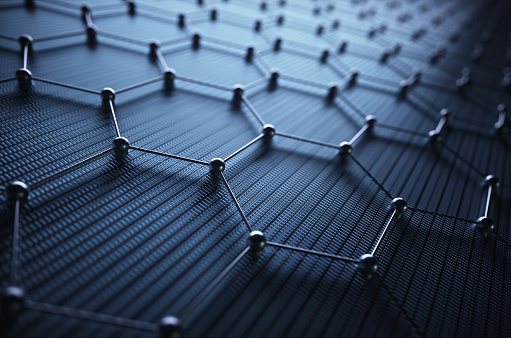
We are excited to announce a revolutionary new synthesis technique that allows for the production of monolayer honeycomb structures of silicon carbide (SiC). This breakthrough could revolutionize the way we build, allowing for the production of stronger, better-insulated structures with less energy and cost. The monolayer honeycomb structures produced by this technique are made of two-dimensional sheets of SiC, arranged in a honeycomb-like pattern. This arrangement gives the structure an extremely high mechanical strength, making it ideal for construction applications.

Continue reading

The recent study conducted by a group of researchers has shed light on the extent of contamination among farms in the United States. The study found that over 75% of farms in the US were contaminated with at least one type of pesticide. This means that the products we consume from these farms are likely to contain some form of pesticide residue. It’s alarming to think that the food we eat may be contaminated with pesticides, and even more concerning that we don’t even know the extent of the contamination.

Continue reading

In recent years, the idea of parents paying their children to do chores has become increasingly popular. But is this really the best way to motivate children? In my opinion, paying children to do chores can be detrimental to their long-term success. Rather than focusing on the monetary compensation, parents should be emphasizing the importance of responsibility. Teaching children that they are responsible for taking care of their own chores is an important lesson they will carry with them into adulthood.

Continue reading

A recent study published by the World Organisation for Animal Health (OIE) has found that culling is an ineffective strategy for controlling rabies outbreaks. The study, which was conducted in Tanzania, used mathematical models to simulate rabies outbreaks in three different scenarios. The results showed that culling had little to no effect on the spread of the disease, while other strategies such as vaccination were much more effective. This suggests that culling is not a viable long-term strategy for controlling rabies outbreaks, and that other measures – such as vaccinations – should be employed to help contain the disease.

Continue reading

Researchers from the University of Maryland have developed a novel method for reducing reactive polysulfides in vegetables to improve their nutritional and sensory properties. This method could potentially increase the shelf life of vegetables, reduce food waste, and improve the quality and taste of fresh produce. In their study, the researchers showed that by controlling the amount of reactive polysulfides in vegetables, they were able to reduce the amount of sulfur-containing compounds that can lead to unpleasant odors and bitter tastes.

Continue reading

As nanoplastic particles become more and more prevalent in our environment, researchers are investigating the potential impacts on human health. A new study published in the journal Nanotechnology has found that nanoplastic particles may play a role in the development of malformations in the heart, eyes, and nervous system. The researchers used a mouse model to assess the effects of nanoplastic particles on developing embryos. They found that mice exposed to nanoplastic particles experienced a significant increase in malformations of the heart, eyes, and nervous system.

Continue reading

Piezoelectrics are a great way to generate electricity from everyday movements. They work by converting mechanical energy from activities like walking, running or even dancing into electrical energy. This electricity can then be used to power small devices such as sensors or even larger items like street lights. Piezoelectrics are already being used in a variety of applications. For example, they are found in the soles of shoes to create energy as the wearer moves, and in smartwatches to power the device.

Continue reading

In a recent study, researchers have found that mass media campaigns are effective in promoting safer behaviors among the general public. This is an encouraging development in an era where health risks, such as those associated with smoking and drug use, are on the rise. The study, published in the journal PLOS One, looked at the impact of mass media campaigns in the United States, Europe, and Asia and found that these campaigns have a positive effect on public health.

Continue reading

A new study has revealed a potential cocktail of gut enzymes that could help in fighting Clostridioides difficile, a major cause of antibiotic-associated diarrhoea and colitis. This bacteria is a major contributor to the rising prevalence of antibiotic resistance, and the findings of this study could have implications for the development of new therapeutic strategies. The research team used a variety of techniques to identify the enzymes that are most effective against C.

Continue reading

Asthma and COPD, two of the most common chronic respiratory diseases, affect millions of people around the world. A new study is exploring the potential of targeting bitter taste receptors to treat these diseases. The research, published in The Journal of Physiology, suggests that triggering these receptors could help reduce inflammation in the airways and reduce symptoms. This innovative approach could lead to new treatments for these debilitating respiratory diseases.

Continue reading

In a new study, scientists have uncovered new concepts about the dynamic nature of molecules. Using a combination of sophisticated computer simulations and experiments, they have discovered that molecules can take on multiple shapes, or “conformers”, and that the transitions between them are rapid and occur on the order of picoseconds, or trillionths of a second. These findings have exciting implications for the development of new drugs and materials, as the ability to quickly switch between different conformations could be used to create molecules with unique properties.

Continue reading

In a recent breakthrough, scientists have developed a new technique, MIDAS, to capture hidden metabolic-protein interactions that can lead to the development of personalized medicine. This technique uses a combination of mass spectrometry and bioinformatics to detect interactions between metabolites and proteins in a single experiment, uncovering the underlying mechanisms of cellular metabolic activity. MIDAS is a powerful tool that can be used to study a wide range of biological processes, such as cancer and neurological diseases.

Continue reading

The future of agriculture is here! A new interactive virtual farm website is giving users access to a variety of farming resources and technology. The website, launched by the University of Wisconsin-Madison, provides an intuitive way for users to explore the world of agriculture. With an interactive map, users can explore different farms, the agricultural systems they use, and the products they produce. Additionally, the website features educational resources, including videos, quizzes and articles, to help users learn more about different farming techniques and technologies.

Continue reading

Recently, researchers have developed a new type of alkaline anion exchange membrane (AEM) that could revolutionize the way we produce electricity. This membrane is made of a special polymer that allows it to transport large amounts of anions, which are negatively charged ions, while still maintaining an alkaline environment. This new membrane could be used in fuel cells and other electrical production systems to improve the efficiency of energy production. It could also potentially be used to help clean wastewater, as the membrane is impermeable to certain contaminants.

Continue reading

Scientists have made an exciting new discovery: the key gene to resist cadmium uptake in leaf and grain! This breakthrough could lead to new ways to protect crops from dangerous levels of the toxic metal. As cadmium is a naturally occurring element, it can often be found in soil, water and air. When present in high concentrations, it can be poisonous and damaging to crops. This new gene could provide the agricultural industry with a much-needed way to protect crops from cadmium.

Continue reading

The future of artificial intelligence (AI) may be found in the study of protein structures. Researchers have recently revealed a new AI-based approach to predicting the 3-D structures of proteins, which could revolutionize our understanding of the molecules that make up all living things. This new method could pave the way for more accurate drug design, as well as a better understanding of the chemistry behind many diseases. With this new technique, scientists are now able to accurately predict the 3-D structures of proteins, which could lead to a better understanding of the molecular biology of living organisms as a whole.

Continue reading

Recent research has revealed a breakthrough in the use of DNA to identify fish eggs in the ocean. Using a technique called “DNA metabarcoding,” scientists from the University of Rhode Island were able to use DNA sequences to determine the species of fish eggs that were collected from the ocean. This discovery has implications for fisheries management, as it will enable scientists to better understand the role of eggs in fish populations and make more informed decisions about how to manage them.

Continue reading

3D Covalent Framework with Large Pores Researchers have developed a new type of 3D covalent framework, with large pores and an unprecedented combination of properties—including high chemical stability and selectivity. The material, described in a new paper published in the journal Nature Chemistry, could be used in a variety of applications, including the storage and delivery of drugs, separation processes, and water treatment. In a new blog entry, researchers have announced their success in developing a new type of 3D covalent framework, with large pores and an unprecedented combination of properties.

Continue reading

Today, scientists have announced a breakthrough in artificial intelligence research that could revolutionize the way we use metal-organic frameworks (MOFs). MOFs are a type of material with properties that are ideal for a variety of applications, from energy storage to drug delivery. By combining AI algorithms with MOF synthesis, researchers have now developed a method to rapidly identify and create MOFs with desired properties. This could enable the development of MOFs with specific applications in mind, such as those that are more durable, lightweight, and able to store energy more efficiently.

Continue reading

Scientists have discovered a unique new way to use algae to create a functional perovskite material. Perovskite materials are a type of crystal structure known for their ability to absorb light and convert it into usable energy. By combining an algae-based organic compound with an inorganic perovskite material, scientists have created a unique material that can both store solar energy and create hydrogen fuel from water. This breakthrough could revolutionize the way we generate clean energy from renewable sources!

Continue reading

A biosensor capable of detecting and analyzing DNA in real-time is now a reality. Scientists from the University of Bonn have developed a nanosensor which uses a tiny strand of DNA to detect and analyze genetic material in less than 10 minutes. The sensor is able to detect and analyze a single gene, a single base pair, or a single nucleotide with unparalleled accuracy. The team believes their sensor could revolutionize the field of genetic testing, as it is capable of performing a wide range of applications in a fraction of the time.

Continue reading

In a major breakthrough, researchers have developed a method to use femtosecond laser ablation to produce high-quality crystalline perovskites. The method, developed by a team of researchers from the University of Tokyo, involves using a few-cycle laser to ablate a perovskite crystal with a pulse duration of less than 10 femtoseconds. The resulting crystal structure was found to be highly crystalline and uniform, with a very low defect density. The team believes that their technique could be used to produce perovskites for various applications, including photovoltaics, optoelectronics and light-emitting diodes.

Continue reading

Today, researchers have developed a single-cell sequencing solution that is set to unleash a disruptive wave of medical breakthroughs. This revolutionary new technology will allow researchers to sequence the genomes of individual cells, which will enable them to identify and characterize rare cell types and genetic variants, as well as assess how individual cells respond to various treatments and environments. This groundbreaking technology provides the potential to uncover mysteries about how cells function, and could lead to major advances in the diagnosis and treatment of diseases.

Continue reading

A new method of regenerating skeletal muscle tissue has been developed by researchers at the University of California, San Diego. The breakthrough could help to treat certain types of muscle injuries and diseases, as well as provide new insight into the body’s natural healing processes. The researchers used a combination of stem cell therapy and bioengineering to create a “scaffold” that helps guide the growth of healthy muscle tissue. The scaffold is made from a type of collagen, which is a protein found naturally in the body.

Continue reading

Author's picture

Elizabeth Dubinskiy

I am high school student with a passion for materials science and engineering. Using this blog I would like to share my research and findings.

High School student

San Francisco Bay Peninsula