A recent study from a team of researchers at the University of California, Berkeley has discovered a new way to manipulate the development of a mouse embryo. By introducing mechanical forces to the embryo, the researchers were able to control the way the embryo formed and developed into a mouse. This groundbreaking new way of manipulating embryo development has the potential to revolutionize the way we study embryonic development and how we use embryos for medical treatments.

Continue reading

The future of electronic devices is here! Scientists at the University of Cambridge have developed a new type of oxide-based material that could revolutionize the way we use electronic devices. The material has been shown to be highly conductive and could be used to develop smaller, faster and more efficient electronic devices. The material is also highly stable and has excellent thermal properties, making it ideal for use in high-temperature environments.

Continue reading

A long-sought-after state of matter has finally been discovered. Scientists have recently announced the discovery of a new state of matter called a “super-solid”. This unique state of matter combines the properties of a solid and a superfluid, resulting in a material that has remarkable physical properties. The super-solid state of matter is created when a superfluid is placed in a lattice of ultracold atoms. Under certain conditions, the superfluid can become pinned in place, forming a solid-like state.

Continue reading

The story of Mars is about to get a bit more interesting, as a new NASA mission to the Red Planet is set to launch in 2023. The Mars Atmosphere and Volatile Evolution (MAVEN) mission is the first of its kind, aiming to explore the history and evolution of Mars’ atmosphere. MAVEN will take a close look at the interaction between the planet and solar wind—the stream of charged particles flowing from the Sun—to determine how much of the atmosphere has been lost to space, and how this process has changed over time.

Continue reading

A new discovery has been made that could revolutionize our understanding of turbulence. Scientists at the University of California, Davis have discovered that turbulence can be both chaotic and organized at the same time. This means that instead of turbulence being completely random, it can be made up of coherent structures that can be predicted. This discovery could have a major impact on many areas of science, including climate change, engineering, and astrophysics.

Continue reading

Fossilized remains of a whale ancestor that lived 43 million years ago have recently been discovered in the Chilean desert and they show how whales evolved from land-dwelling creatures to the giant sea-dwelling mammals they are today. The fossil, which was studied by a team of international researchers, revealed that whales descended from a creature that was as small as a wolf and had feet and limbs that allowed it to both swim and walk on land.

Continue reading

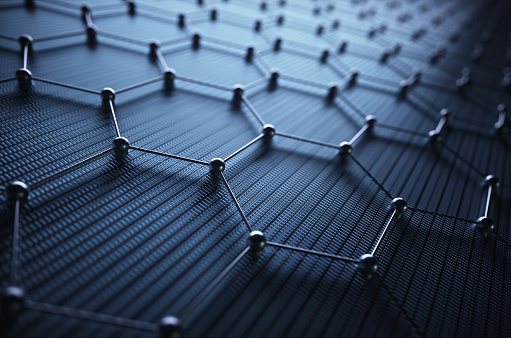
In a new study, researchers have provided a real-time glimpse into the self-assembling process of nanoparticles into crystals. Using a combination of experiments and computer simulations, the team was able to observe how the nanoparticles form the crystalline structures as they interact with one another. The researchers found that the nanoparticles self-organize into two-dimensional structures in a manner that resembles how atoms in a crystal are arranged. The nanoparticles form a lattice-like structure, with the particles connecting to each other in a regular pattern.

Continue reading

Scientists have developed a new thermal spray coating that could revolutionize the way we manage heat in our electronic devices. The new coating, published in the journal Science, is made from MXene, a two-dimensional material that is both highly conductive and thermally stable. The spray coating can be applied to various surfaces in order to control and manage heat. This could have a wide range of applications from cooling electronics to improving the energy efficiency of buildings.

Continue reading

Recent breakthroughs in research have opened up the possibility of visible light harvesting as a catalyst for chemical reactions. This means that instead of traditional energy sources like electricity, visible light from the sun or any other artificial light source could be used to power chemical reactions. This could have huge implications for the sustainability of our energy sources in the future, as we look for better ways to make use of renewable resources.

Continue reading

As the demand for safe and healthy food continues to rise, scientists are constantly searching for new ways to detect contaminants in food. In a new breakthrough that has implications for food safety and environmental protection, researchers have developed a paper-based sensor that can detect pesticides in food quickly and accurately. This new sensor is able to detect the presence of pesticides in food samples in a matter of minutes, allowing for faster and more efficient testing of food products.

Continue reading

We are living in an age of sustainability and resourcefulness, and scientists have recently discovered a new way to use carbon dioxide (CO2) to create biodegradable plastics. By harnessing the power of photosynthesis, researchers have discovered a way to turn CO2 into a precursor of polylactic acid (PLA) plastic. PLA is a biodegradable plastic that has been used in various consumer products such as food packaging, medical devices, and even electronics.

Continue reading

It has been found that hagfish slime, a mucus-like substance created by the hagfish, is highly effective at blocking pores. Researchers from the Okinawa Institute of Science and Technology Graduate University (OIST) studied the slime and found that it is made up of an interlocking mesh of proteins that works like a net. The mesh is able to block pores and prevent a wide range of materials from entering the body.

Continue reading

We all know that stress can take a toll on our mental and physical wellbeing. But did you know that stress can also have an effect on the environment around us? A recent study from researchers at the University of Washington found that stressed individuals can emit an airborne chemical that is detectable by a special device up to a meter away. This chemical, known as an “emotional signature,” can then be used to detect and measure stress levels in people who are far away.

Continue reading

It’s no secret that white-tailed deer are resilient and hardy creatures. But researchers from the University of Georgia recently uncovered an amazing new discovery about the way these animals fight off bacteria. They found that a protein in the deer’s blood, called C-reactive protein, is able to bind to and kill certain types of bacteria. This discovery could lead to the development of new treatments for bacterial infections in humans and other animals.

Continue reading

In a recent breakthrough, researchers have developed a new type of energy-efficient, customizable inorganic membrane that could revolutionize water filtration. This new membrane is made of silicon nanowires and has the potential to replace traditional organic-based membranes. It boasts higher efficiency, better selectivity, and greater durability. Additionally, the membrane is customizable, allowing it to be tailored to specific water filtration needs. This could lead to cleaner and safer drinking water for people around the world.

Continue reading

New research has uncovered a possible breakthrough in green energy efficiency. A team of scientists has developed a new iridium-based catalyst that could potentially increase the efficiency of fuel cells used in green energy sources, such as hydrogen and methanol. This catalyst is made up of iridium nanoparticles and is capable of significantly reducing the amount of energy lost during the process of converting fuel into electricity. Not only does this have the potential to increase the efficiency of green energy sources, but it could also reduce the cost of production.

Continue reading

A new study has revealed that mice can play virtual reality (VR) games! Researchers developed an interactive VR environment that allowed mice to play a game resembling Pac-Man. The study, published in the journal Nature Neuroscience, showed that the mice learned how to play the game, indicating they had a basic understanding of the environment. The researchers found that the mice not only learned how to play the game, but also became better at it over time, suggesting they had a sense of spatial navigation.

Continue reading

A new tool in the world of cytometry may revolutionize the way we study human cells. The tool, developed by researchers at the University of California San Diego, allows researchers to rapidly study human cells without the need for extensive culturing and processing. This breakthrough could mean that scientists can now more quickly and accurately study the behavior of cells and uncover new insights into their roles in health and disease.

Continue reading

In a new study, scientists have discovered a type of cell in the small intestine that is responsible for severe diarrhea. This cell, known as a goblet cell, plays a major role in the production of mucus, which helps protect the intestine from pathogens and toxins. The researchers believe that by better understanding the role of goblet cells in diarrhea, they can develop new treatments and therapies to help people suffering from chronic diarrhea.

Continue reading

Nano-optical technology is revolutionizing the way scientists track cellular communications. By using ultra-small optical nanosensors, scientists can track individual cells and their communications on a whole new level. The nanosensors are able to detect tiny changes in the behavior of cells, allowing for a better understanding of how cells interact with each other. This new technology could lead to a greater understanding of diseases, as well as allow for faster diagnosis and treatment.

Continue reading

Recently, a team of scientists have made a groundbreaking discovery in regards to the SARS-CoV-2 virus. By utilizing a combination of electron microscopy and cryo-electron microscopy, the research team was able to uncover the three-dimensional structure of the virus in unprecedented detail. This new understanding of the virus’s structure will allow scientists to better comprehend how the virus functions and how it interacts with the human body. This breakthrough could lead to the development of more effective drugs and treatments for the virus, as well as potentially provide insights into the origin of the virus.

Continue reading

Scientists have recently discovered what is being referred to as the flattest explosion in space ever recorded! The explosion, which is known as a gamma-ray burst (GRB), occurred in the constellation of Orion, and was observed by the Hubble Space Telescope. The explosion is thought to have been caused by two ultra-dense neutron stars colliding with each other at nearly the speed of light. The explosion was so powerful that it created a massive shockwave that spread outward and created a ripple effect in the surrounding space.

Continue reading

Crop loss is a major issue in Tanzania, but solutions are on the horizon. A team of researchers has been working to find ways to reduce crop loss due to pests, diseases, and other environmental factors. The team has identified several solutions, including the use of improved seed varieties, better irrigation systems, and the introduction of beneficial insects to help control pests. They have also developed a mobile application that can help farmers monitor crop conditions in real time and take necessary action.

Continue reading

Recent studies have found that the chemical isoeugenol has the potential to alter the behavior of fish. This chemical, a natural compound found in many herbs and spices, has been used to enhance flavors in food. However, research has now revealed that isoeugenol can cause changes in the behavior of fish, including alterations in their feeding and reproductive behavior. This finding has important implications for the fishing industry and for the health of fish populations around the world.

Continue reading

Predatory dinosaurs, such as Tyrannosaurus Rex, were more than just bone-crunching beasts. A recent study by scientists from the University of Bonn reveals that T-Rex, and many other predatory dinosaurs, also had a more lizard-like side. The research team discovered that T-Rex, and other predatory dinosaurs, sported a specialized type of scaly skin. This “pebbly-scale” skin was similar to that of modern day lizards, providing these dinosaurs with more flexibility and maneuverability when hunting.

Continue reading

Author's picture

Elizabeth Dubinskiy

I am high school student with a passion for materials science and engineering. Using this blog I would like to share my research and findings.

High School student

San Francisco Bay Peninsula