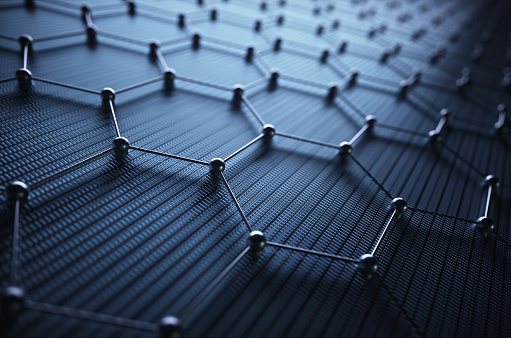
Adding a copolymer to bacterial production could be the key to unlocking more efficient production of pharmaceuticals, biofuels, and other valuable products. This is according to a new study from researchers at the University of Maryland, which shows that a small addition of a copolymer can boost production in bacterial systems. This could lead to major advances in the bioproduction of medicines, fuels, and other products. The researchers found that adding a copolymer to the bacterial system increased its efficiency by up to three times.

Continue reading

Fifty years ago, on April 11th, 1973, the crew of Apollo 16 launched from the Kennedy Space Center, marking the fifth manned mission to the moon and the second by the United States. This mission was unique in that it was the first to include a lunar rover which allowed the astronauts to explore the surface of the moon more extensively than ever before. The astronauts gathered a total of 208.

Continue reading

As the world transitions to renewable energy sources such as solar power, a new countdown is on to an exciting event: the Great North American Solar Eclipse of 2024. On April 8, 2024, a total solar eclipse will be visible from the United States, Mexico, and parts of Canada. This eclipse will be the first total solar eclipse to be visible from the continental United States since 2017, and it will also be the first total solar eclipse in North America since 1979.

Continue reading

In a recent breakthrough, researchers have made a major discovery in our understanding of dark matter and dark energy. By using a new technique to observe the dark matter distribution in the universe, scientists have been able to measure the cosmic structure of the universe and gain new insight into the mysterious dark matter. This new technique, known as Cosmic Web Reconstruction, uses a combination of gravitational lensing and galaxy clustering to map out the dark matter distribution in the universe.

Continue reading

A new study has recently been conducted to explore the use of magnon-magnon coupling in hybrid perovskites. The study, published in Physical Review Letters, was conducted by a team of researchers from the University of Tsukuba in Japan. The team examined a phenomenon known as the Dzyaloshinskii-Moriya (DM) interaction, which is a type of antisymmetric exchange interaction between two magnetic moments. The study found that this interaction could be used to efficiently control magnon-magnon coupling in these hybrid perovskites.

Continue reading

In a recent study, a classicist has challenged the modern view of the origins of religion. Professor Jens-Uwe Krause of the University of Tübingen argues that the belief in gods and rituals are not a product of the development of agriculture and urbanization in the second millennium BCE, as many modern scholars believe. Instead, he suggests that religion has much earlier roots, which had already been established in the Stone Age.

Continue reading

A new study published in Nature Catalysis has revealed a panoramic view of the catalytic conversion network that is used to convert raw materials into useful products. This groundbreaking research has revealed the intricate details of how catalysts are used to transform raw materials into the intermediate and final products that are essential for industrial and everyday life. The findings of this study will help scientists and engineers design more efficient and environmentally friendly catalysts that can be used to convert a wide range of raw materials into useful products.

Continue reading

Recently, scientists have made a revolutionary discovery about our universe – it may be expanding faster than we previously thought. This new finding has upended our understanding of the universe, and could have far-reaching consequences for our future. The expansion of the universe has always been a source of fascination and speculation. For many years, scientists have sought to understand the rate at which the universe expands, and how it might change over time.

Continue reading

The future of recycling is here, and it’s looking ocular! Scientists have recently developed a method of recycling ocular products that is both efficient and sustainable. This innovative new method involves breaking down ocular products into their individual components, separating the organic and inorganic materials, and then using the organic materials as fuel and the inorganic materials as raw materials to produce new ocular products. This process has the potential to reduce global waste while also creating new, sustainable materials that can be used in a variety of applications.

Continue reading

For centuries, supernatural beliefs have been a part of human society. From ancient religions to modern spiritualism, people have had a fascination with the unknown and the unseen. In recent years, this fascination has extended to the scientific realm as researchers investigate the phenomenon of supernatural beliefs. A new study published in the journal Nature Human Behaviour has revealed that supernatural beliefs were a feature of all societies throughout history, including hunter-gatherer communities.

Continue reading

The James Webb Space Telescope is set to revolutionize our understanding of the universe. According to a new study, the telescope will be able to peer back to the very earliest galaxies, even farther than the Hubble Telescope can. This could give us unprecedented insight into the history and evolution of galaxies, and the universe as a whole. With the capability to observe galaxies up to 13.5 billion years old, the Webb Telescope is poised to take us back to the very beginnings of time!

Continue reading

Recently, scientists have made a breakthrough discovery which could have a positive impact on the poultry industry. In a research project conducted at the University of Sydney, researchers have successfully developed a method which enables male chickens to hatch from eggs. This is good news for poultry farmers who have traditionally only been able to rely on female chickens for egg production, as male chickens are more proficient at producing meat.

Continue reading

In an exciting breakthrough, scientists have found a new way to generate green energy through electrochemical corrosion. Using an electrochemical cell, researchers were able to produce an electrical current as a by-product of the corrosion process. This current can then be used to power devices and reduce the reliance on fossil fuels. The potential applications of this new technology are vast; it could be used to generate electricity in locations where traditional sources are unavailable, or for powering remote devices.

Continue reading

Recently, researchers at the University of Pennsylvania have discovered that bacterial biofilms can actually affect the surface of materials. A biofilm is a group of bacteria that stick together and form a thin layer on a surface. This layer of bacteria can cause corrosion, wear, and other damage to the material. The researchers discovered that this process is accelerated when the biofilm layer is exposed to chemicals, temperature, or other environmental conditions.

Continue reading

In a world facing the life-altering effects of climate change, coral reefs are being hit especially hard. Recent research has suggested that current methods of conservation and protection have not been as effective as hoped, leading researchers to look for innovative new approaches to protecting this fragile ecosystem. One such approach is a technology-centered focus on coral reefs, which could be the key to preserving them for future generations. The idea behind this approach is to use technology to create a more tailored and efficient solution for preserving coral reefs.

Continue reading

A new study from the University of New South Wales has revealed that scientists in training can benefit from creative activities outside the lab. The research, which was published in the journal PLOS ONE, found that engaging in activities such as music, art, and writing can help researchers develop the innovative and creative thinking skills necessary for success in the field. The study surveyed almost 400 scientists and researchers and found that those who engaged in creative activities outside of the lab had greater levels of creativity in their work.

Continue reading

We have all heard of the dangers of PFAS chemicals in our environment, but did you know that our furniture could be contributing to the problem? A new study has found that some furniture, specifically upholstered furniture, is a major source of these dangerous compounds. The study, conducted by researchers at the University of California, Riverside, analyzed the foam in upholstered furniture and found high levels of PFAS chemicals. These chemicals, which are associated with various health risks, are released into the air, where they can be inhaled or absorbed by skin.

Continue reading

If you thought lab-grown, cultured meat was just a futuristic dream, think again! Scientists have just announced that they have successfully created lab-grown fat tissue from cow cells - a major step in the process of creating edible cultured meat. This is an incredible breakthrough that could revolutionize the way we produce meat and help us create more sustainable food sources. The team of researchers from Amsterdam managed to create the fat tissue by replicating the environment of a cow’s adipose tissue, or fat cells.

Continue reading

Today scientists have found a way to make nonwovens which are both electrically and thermally insulating. Nonwovens are fabrics made from fibers that are bonded together without weaving or knitting. This new material has the potential to revolutionize the way we think about insulation and energy efficiency. These new nonwovens are made by combining cellulose nanocrystals and a type of resin. The combination of these two materials creates a nonwoven fabric which is highly resistant to heat and electricity.

Continue reading

A new study published in The Astrophysical Journal has discovered evidence of the earliest galaxies in the universe. This discovery provides new insight into the timeline of galaxy formation, which is thought to have begun shortly after the Big Bang. The research team, led by Dr. Grant Tremblay of the Harvard-Smithsonian Center for Astrophysics, used the Chandra X-ray Observatory to observe a distant cluster of galaxies known as Abell 2744. By studying the X-ray emission from the galaxies in this cluster, the team was able to identify the oldest galaxies in the universe.

Continue reading

Researchers at the Harvard John A. Paulson School of Engineering and Applied Sciences (SEAS) have developed a new type of metalens that can focus light into multiple foci, providing enhanced control over the spectral, polarization, and ellipticity of light. This could have a wide range of applications in optical communications, imaging, and sensing. The new multi-foci metalens could be used to precisely manipulate light in ways that are not possible with conventional lenses, potentially leading to faster, more efficient optical systems.

Continue reading

Scientists have discovered a new type of porous material that can absorb and store carbon dioxide, potentially helping to reduce the amount of toxic gas in the atmosphere. The material, known as a metal-organic framework, has been found to be highly effective at absorbing and storing carbon dioxide, even at low concentrations. It is also able to store the gas for long periods of time without degrading or losing its effectiveness.

Continue reading

A recent study has discovered a new way to detect and prevent aortic ruptures, a potentially fatal medical condition. Aortic ruptures occur when a weakened portion of the aorta wall tears and allows blood to escape into the abdominal cavity, leading to rapid and often fatal blood loss. The study, published in the journal Science Translational Medicine, identified a biomarker for aortic wall weakening, which can be used to detect and predict aortic ruptures before they occur.

Continue reading

Scientists have recently discovered a new star system that is unlike any other. Named 2MASS J2126-8140, the star system consists of two large rings of dust and gas that are encircling a young, low-mass star. The rings are approximately 300 and 600 astronomical units in diameter, making them the largest and most distant structures ever seen around a young star. This discovery provides a new understanding of the formation and evolution of planetary systems, and could help us better understand our own Solar System.

Continue reading

Shape-shifting antibiotics have been developed to help fight deadly infections. Scientists have discovered a new class of antibiotics that can change their shape to counter bacteria’s ability to develop resistance. The new antibiotics have been tested on mice infected with a drug-resistant strain of Staphylococcus aureus, which is responsible for a wide range of infections, including skin and soft tissue infections, sepsis, and pneumonia. The results showed that the shape-shifting antibiotics were able to completely clear the infection in the mice.

Continue reading

Author's picture

Elizabeth Dubinskiy

I am high school student with a passion for materials science and engineering. Using this blog I would like to share my research and findings.

High School student

San Francisco Bay Peninsula