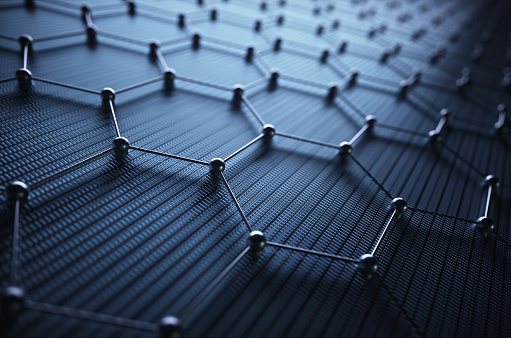
It’s no secret that understanding the behavior of complex materials is a challenging task for scientists. But a new approach could make it much easier. Researchers have developed a quantum approach to studying electronic properties of complex materials, with potential applications in a wide range of industries such as energy, healthcare, and telecommunications. The method, which combines density functional theory with the approaches of quantum information theory, allows researchers to analyze materials at the single particle level.

Continue reading

Today, a group of high school students from around the world have achieved a remarkable feat: they’ve created AlphaFault, the world’s first fabled artificial intelligence (AI). This AI is capable of solving complex problems and is touted as a revolutionary tool for both the education and tech industries. AlphaFault is the brainchild of a group of high schoolers from diverse backgrounds and cultures, all of whom have worked tirelessly to make their dream a reality.

Continue reading

A recent discovery by scientists at the University of Michigan has the potential to revolutionize cellular identity research. By identifying a new molecule that can uniquely identify cells, researchers have opened up the possibility for further advancements in the understanding of cellular identity. This molecule, called a “unique molecular identifier” (UMI), is the first ever molecule that can uniquely identify cells from the same type. This discovery has the potential to have a significant impact on the study of cellular identity and could lead to new treatments for diseases such as cancer, neurodegenerative diseases, and autoimmune disorders.

Continue reading

In a recent study, scientists have discovered a new way to use palladium to reduce carbon dioxide (CO2) pollution. Through a series of chemical reactions, the process converts CO2 into a useful molecule for industrial applications. The findings, published in Nature Communications, could help reduce the amount of hazardous CO2 emissions from industrial processes. The research team, led by scientists from the University of Washington, focused on the effect of palladium on the chemical states of CO2.

Continue reading

Scientists have recently discovered the potential of embryonic cells in worms to regenerate themselves, potentially leading to new treatments for age-related illnesses. In a study published in Science, researchers investigated how embryonic cells can regenerate in the C. elegans worm. They found that when these cells are exposed to a certain type of stress, they can reactivate a series of genes that allow them to recover and rebuild themselves. This process could be used to repair cells damaged by aging, or to restore lost or damaged tissue.

Continue reading

Did you know that scientists have developed tunable molecular compounds? These compounds are capable of reacting to their environments in a way that could be incredibly beneficial for drug delivery and other applications. A team of researchers at the Swiss Federal Institute of Technology in Zurich have created a type of molecule called “azobenzene” that can change its shape in response to a variety of stimuli, such as light, heat, and electric fields.

Continue reading

Today, the world got a glimpse of the universe in a way that has never been seen before. Scientists have revealed the first images taken by the James Webb Space Telescope (JWST), and they are incredible. The images show a vast array of galaxies and stars, as well as hints of distant planets and other cosmic wonders. It is an exciting time for the astronomy community, as the JWST can reveal secrets that have been hidden until now.

Continue reading

Astronomers have recently made a groundbreaking discovery that could redefine our understanding of the universe. By studying the X-ray Spectral Variability of a nearby galaxy, they have found evidence that suggests that the mysterious dark matter that makes up most of the universe could be composed of tiny, fast-moving particles. This discovery opens up an entirely new realm of possibilities in how we conceive the universe and could be the first step to unlocking the mysteries of dark matter.

Continue reading

In a recent move, lawmakers in several states are attempting to ban the teaching of critical race theory in schools. Critical race theory is a framework for understanding and addressing racial inequality. It examines how racism is embedded in our society and how it has impacted individuals and communities through history. The lawmakers argue that critical race theory promotes division and hatred, and should not be taught in schools. However, many experts in education and civil rights argue that this approach to teaching about racism is essential for helping students understand the systemic racism that exists in our society.

Continue reading

NASA is preparing to launch an instrument that will track air pollution from space. The Tropospheric Emissions: Monitoring of Pollution (TEMPO) instrument will be installed on a satellite orbiting Earth. This instrument is the first of its kind, and it’s exciting to think about the possibilities of what it can do. TEMPO will be able to measure the amount of nitrogen dioxide in the atmosphere, which is a pollutant that can cause respiratory and other health issues.

Continue reading

On April 8th, 2023, a total solar eclipse will be visible to millions of people in the United States and parts of Canada, Mexico, and Central and South America. This remarkable event will be the first total eclipse visible from the contiguous United States since the Great American Eclipse of 2017. For those lucky enough to be in the path of totality, the eclipse will be a once-in-a-lifetime experience and will be the longest-lasting total solar eclipse of the 21st century, lasting 4 minutes and 28 seconds.

Continue reading

A team of researchers have recently made a groundbreaking discovery in the field of ferroelectric materials. By combining 3D printing techniques with bacteria, they have developed a new type of ferroelectric material which shows a much higher degree of electrical polarization than traditional materials. This could revolutionize the way we use electricity in the future. The new material is highly efficient at storing and transferring electrical charges, and has the potential to significantly reduce our reliance on fossil fuels.

Continue reading

In a breakthrough discovery, scientists have created a nanocage that is larger than ever before, allowing for the transport of bigger and more effective drug cargoes. This new nanocage, which is made of a combination of polymers and metal ions, is 100 times larger than the conventional nanocage, and is capable of carrying up to 500 drug molecules at a time. This is a major breakthrough in the medical field, as it means that more drugs can now be delivered to the body with greater efficiency.

Continue reading

A new genetic agent developed by researchers at the University of Washington has shown promise in helping to fight a life-threatening fungal disease. The agent, called a gene drive, is designed to spread a beneficial genetic trait through the entire population of a species. This could be a major breakthrough for the treatment of a deadly fungal disease known as Candida auris, which has been on the rise in recent years.

Continue reading

A revolutionary advance in 3D technology has made it possible to create realistic 3D images with unprecedented accuracy. This breakthrough is set to revolutionize the way we create, share and experience 3D content. The technology uses artificial intelligence (AI) and machine learning to generate high-quality 3D images from a single 2D image. It can accurately recreate the shapes, textures and colors of objects in a 3D environment, giving viewers a realistic experience of their surroundings.

Continue reading

A new species of algae has been discovered that could help us better understand how nitrogen cycles through the environment. Researchers have found that the algal species, Mantoniella squamata, produces nitric oxide, a gas that plays an important role in the nitrogen cycle as it helps to convert nitrogen into usable forms for plants. This is the first time that algal species has been found to produce nitric oxide, and it could help us to better understand how nitrogen cycles through the environment, as well as how it is used by different species.

Continue reading

For decades, coffee farmers have been struggling to keep their crops healthy and sustainable. This is due to several environmental factors such as climate change, pests and diseases, and soil erosion. But a new study is proposing a novel ecological theory that could help coffee farmers achieve sustainability. The research team from the University of Michigan and Michigan State University found that by introducing a diverse range of plants and animals to the coffee farm, the environment can be better regulated and managed for better crop yields.

Continue reading

A new probiotic that could help Caribbean corals resist the impact of climate change is under threat. It was recently discovered living in healthy colonies of coral in the Caribbean and could be a potential solution to the devastating effects of climate change on coral reefs. Unfortunately, these probiotic corals are now threatened by an increase in ocean temperatures, ocean acidification, and other human-made pollutants. As the effects of our changing climate become more severe, it is essential that we protect these coral colonies and their probiotic inhabitants.

Continue reading

China is leading the way in space exploration with their new Stirling orbit project. This project will create a new type of orbit that is able to extend the mission duration of a spacecraft. The Stirling orbit is a result of an equation known as the Stirling-Brouwer equation and is a type of elliptical orbit. This orbit has a unique property that allows a spacecraft to travel around the earth in a figure-eight shape.

Continue reading

Recently, researchers from Japan have made a breakthrough in stem cell research. Using embryonic stem cells from monkeys, they have been able to create a structure that resembles a monkey embryo. This breakthrough is the first of its kind and could revolutionize the field of stem cell research. The embryonic stem cells were used to create a three-dimensional structure that was able to develop into a primitive embryo-like structure. This breakthrough could potentially open the door to new treatments and cures for a variety of diseases, as well as provide insight into the development of an embryo.

Continue reading

Scientists have just developed a groundbreaking new stealth polymer that could revolutionize the way drugs are delivered to the human body. This new polymer is designed to be resistant to the body’s natural defenses and is able to deliver drugs to specific parts of the body more efficiently. This could mean that drugs could be delivered to hard-to-reach areas without the risk of being broken down by the body’s natural defenses.

Continue reading

We have incredible news to share in the world of science! A team of researchers at the University of Tokyo have recently discovered a major breakthrough: ferroelectricity in an elementary substance. This discovery is incredibly exciting, as it opens up a whole new realm of possibilities and could lead to a range of new applications. Ferroelectricity is a type of electrical polarization that can be switched using an applied electric field.

Continue reading

The future of education and learning is changing with the introduction of artificial intelligence (AI) technology into the classroom. As AI tools become more advanced and ubiquitous, it is important to consider the implications and potential benefits of incorporating chatbots into the learning environment. In this viewpoint, we discuss the potential of ChatGPT, a chatbot that uses natural language processing (NLP) to help students learn. We argue that ChatGPT is a valuable tool to help students understand and engage with academic material and provides a unique way for teachers to interact with their students.

Continue reading

A team of researchers from the University of Barcelona have developed a new tridimensional anticancer agent that could be used to fight drug-resistant tumors. This new agent, which is made up of small molecules, is able to bind to the surface of cancer cells and deliver an antitumor agent directly to the site of the tumor. This could be a revolutionary step forward in the fight against drug-resistant cancer, as the agent can target cancer cells while leaving healthy cells untouched.

Continue reading

DNA packaging is an essential process that occurs in all living organisms. Recently, researchers at the University of California, San Diego, have discovered a new mechanism that helps cells control the packaging of DNA during cell division. By studying the molecular structure of the bacterial protein RecD, the team found that it binds to the DNA molecule, forming a loop that helps to package the genetic material into the cell’s nucleus.

Continue reading

Author's picture

Elizabeth Dubinskiy

I am high school student with a passion for materials science and engineering. Using this blog I would like to share my research and findings.

High School student

San Francisco Bay Peninsula