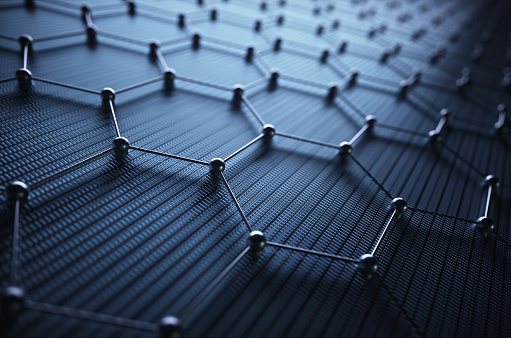
Today, researchers from the Institute of Chemistry of Materials of Madrid have announced a major breakthrough in medical technology: the development of bioelectrodes with tunable lifetimes. These bioelectrodes are designed to be used in medical implants, such as pacemakers or artificial organs, and can be adjusted to the individual patient’s needs. By simply changing their composition or their structure, bioelectrodes can be programmed to last for different lengths of time. This means that medical professionals can tailor-make implants to the individual needs of their patients, allowing them to have a more personalized treatment with fewer complications.

Continue reading

In May 2023, the James Webb Space Telescope (JWST) is set to unveil a spectacular stellar nursery and a unique star-forming galaxy. This galaxy, IC 1795, is located in the constellation of Cassiopeia and is believed to be about 3 million years old. The stars in IC 1795 are forming at a rate that is about five times faster than normal, making it an ideal target for JWST. By studying this remarkable star-forming region, scientists hope to gain insight into the early stages of stellar evolution.

Continue reading

A team of scientists have discovered a new material that could be the key to the development of more sustainable solar cells. The material is a type of organic semiconductor that has the potential to be more efficient, eco-friendly and cost-effective than current solar cells. The team’s research has revealed that the material, when exposed to light, can absorb more energy than other currently used solar cell materials. This means that it could potentially generate more electricity from the same amount of sunlight, leading to more efficient solar cells.

Continue reading

Today, researchers at the University of Washington have made a major breakthrough in stem cell therapy that could revolutionize treatments for masses of people. Using a new technique, scientists have successfully created induced pluripotent stem cells (iPSCs) from adult cells and have used them to treat various diseases, including cancer and cardiovascular diseases. This is a huge step forward in stem cell therapy, as iPSCs can repair and replace damaged or lost cells and tissues, potentially leading to cures for many diseases.

Continue reading

In a groundbreaking study published in the journal Nature, researchers have discovered that African rhinoceroses may possess a unique retrovirus that could potentially protect their species from diseases that affect their Asian counterparts. While the virus is not yet known to cause any harm to African rhinos, the study has revealed that it is present in their genome, and could be used to develop treatments or vaccines to protect them from future diseases.

Continue reading

Today, renowned physicist Stephen Hawking has announced his new groundbreaking theory about the cosmos. According to Hawking, his theory reveals the true nature of the cosmos and its ability to self-regulate. Hawking claims that this new insight could provide a better understanding of the Big Bang and the formation of galaxies. This could lead to a better understanding of the origins of the universe and the age of the cosmos. Hawking’s findings have left the scientific community in awe, and further research is sure to follow.

Continue reading

In a groundbreaking study published in Nature Ecology & Evolution, researchers have discovered a new way in which plants can evolve: swapping genetic “modules” from one species to another. This process, known as “module swapping,” could be a major driver of plant evolution and adaptation to changing environmental conditions. The researchers studied over 600 plant species and found that module swapping was common in all of them. The modules contain genes that regulate important functions like growth, flowering, and stress response, and can be exchanged between species without any detrimental effects.

Continue reading

Recently, scientists have discovered an unlikely solution for protecting humans from mosquitoes - soaps! A study conducted in India has shown that soaps can be used to deter mosquitoes, as well as other pesky insects. The study found that when soaps were placed near areas where mosquitoes were present, the mosquitoes were significantly less likely to be seen in the area. This is because the soaps create an unpleasant environment for the mosquitoes, making the environment less hospitable for them.

Continue reading

In a groundbreaking study, scientists have discovered that microbes living in the Swiss Alps are capable of digesting organic matter that originates from the Arctic. Researchers from the University of Lausanne and ETH Zurich used genetic and geochemical analyses to identify how the microbes metabolize these substances and how they eventually end up in the Arctic. The results, recently published in Science, provide insight into the complex global cycling of organic matter and its impact on the environment.

Continue reading

The rise of antibiotic-resistant bacteria is a major public health concern, and scientists have been searching for new ways to fight these organisms. Recently, researchers from the University of Cambridge have proposed an innovative approach to combat resistance: the creation of a “resistance reserve”. This reserve would contain a number of antibiotics that are not currently in use, but could be deployed if existing antibiotics become ineffective. The idea is that if bacteria become resistant to current antibiotics, then the reserve antibiotics could be used as a last resort.

Continue reading

It’s no surprise that the UK’s universities are renowned worldwide for their excellence in teaching and research. In a recent report, the Higher Education Funding Council for England (HEFCE) has revealed a new “excellence framework” that could significantly raise the bar of excellence in the UK university system. This framework puts an emphasis on research excellence, with a particular focus on the impact it has on society. Universities that are able to demonstrate such excellence will be rewarded with additional funding.

Continue reading

A new method has been discovered that could help reduce oxidative damage to the mitochondria within the liver, mitigating liver disease. The method involves a combination of dietary and lifestyle interventions to reduce oxidative stress and inflammation, as well as supplementation with natural antioxidants such as melatonin, resveratrol and quercetin. This could be a major breakthrough in treating liver disease, as oxidative damage to mitochondria is a major factor in the development of liver disease.

Continue reading

Astronomers have recently made a groundbreaking discovery—they have found evidence that galaxies spy on their neighboring galaxies! By closely studying the properties of galaxies in the local universe, they have now been able to identify telltale signs that galaxies are in the process of “stealing” gas and stars from their neighbors. This discovery is a major step forward in our understanding of how galaxies evolve over time. This groundbreaking discovery has given us an unprecedented window into the evolution of galaxies.

Continue reading

This week, a team of researchers from the University of California released a new Artificial Intelligence (AI) tool called PESTO. This tool can predict the interactions between proteins, which could help scientists in their efforts to better understand how proteins interact with one another in a cell. PESTO uses a deep learning technique to analyze data from protein-protein interactions, analyzing hundreds of thousands of images of protein-protein interactions to learn the patterns of how proteins interact.

Continue reading

Researchers have made an incredible breakthrough in nanotechnology that could revolutionize the way we fight cancer. Utilizing nanotechnology, scientists have developed a way to safely guide cancer-fighting cells to their target in the body. This breakthrough could allow for more precise targeting of cancer cells, and therefore could lead to more efficient cancer treatments. This exciting new technology could pave the way for a future of more efficient and less invasive treatments for cancer.

Continue reading

A new method for growing protein crystals has been discovered, and it could open up new avenues for drug discovery. The technique, developed by researchers from the University of Cambridge, uses a combination of a protein-targeting enzyme and a solvent system to create larger, better-quality crystals than ever before. The crystals can then be used to gain a better understanding of the protein’s structure, which can help scientists to design new, more effective drugs to treat diseases.

Continue reading

Scientists have recently discovered a way to semi-metallize iodide and induce photoelectric behavior, a finding that could potentially open up a new range of applications for materials. This study, conducted by researchers at the University of California, is the first of its kind to show that this material can be used to generate a photoelectric effect. The results of the study have been published in the journal Nature Materials. This breakthrough could have exciting implications for the future of materials science.

Continue reading

Today, scientists have announced an exciting new development in the field of genetics: the Human Pangenome. This breakthrough technology will enable the equitable analysis of the entire human genome, helping to revolutionize our understanding of genetic diseases, and furthering our progress towards personalized medicine. With the Human Pangenome, researchers are now able to identify key genetic differences between individuals, which can inform personalized treatment plans and therapies. This could be a game-changer in the fight against complex diseases, and improve the quality of life for countless people around the world.

Continue reading

Recently, researchers at the University of Bath have discovered a new type of particle that exhibits negative mass. These particles, known as hybrid exciton-polaritons, are created by mixing light and matter, and are capable of flowing against a force. This breakthrough could revolutionize the field of quantum mechanics, and pave the way for new discoveries. This new particle, the hybrid exciton-polariton, is a unique combination of light and matter, and is capable of exhibiting an unexpected and rare property - negative mass.

Continue reading

Scientists have recently discovered a new liquid quasicrystal with a dodecagonal tiling pattern! This is a big deal, as quasicrystals are usually found in solid form and are incredibly rare. This breakthrough could have implications for materials science and other fields. The team of researchers used nuclear magnetic resonance to detect the liquid quasicrystal in a solution of water and 1,2-dimethylbenzene. This is the first time that a liquid quasicrystal has been found and it could open up a world of new possibilities.

Continue reading

Biomass is the most abundant source of renewable energy in the world and is increasingly being used as an alternative to traditional fossil fuels. But, breaking down biomass into its usable components is a difficult process, often involving expensive and energy-intensive techniques. However, a new study from researchers at the University of Toronto has uncovered a potential solution to this problem: copper. In their study, the researchers found that copper can be used in a catalytic process to break down biomass efficiently and cost-effectively.

Continue reading

New research has revealed a key protein that enables broken nerves in the body to repair themselves, paving the way for potential new treatments for nerve damage. This protein, known as Zeb1, was found to be essential for the repair of nerves in the body, and it could potentially be used to treat conditions such as peripheral neuropathy, stroke, and spinal cord injury. The findings, published in the journal Cell Reports, could be a major breakthrough in the treatment of these conditions.

Continue reading

Oilcane is an emerging biofuel crop with the potential to revolutionize the renewable energy industry. In a recent study, researchers from the University of Florida have discovered the unique microbiome of oilcane and its role in plant growth and development. The findings could lead to improved agricultural practices and higher yields of this promising biofuel crop. Oilcane is a grass-like plant that can be processed into a variety of biofuels, including biodiesel and ethanol.

Continue reading

Today, scientists have made some incredible discoveries in the field of planetary exploration. A team of researchers recently announced the discovery of a new planet, called Proxima Centauri b, located in the Alpha Centauri star system, just over four light years away from Earth. This planet is the closest planet to our Solar System ever discovered, and is believed to be similar to Earth in size, mass, and temperature. It is a remarkable find, and could potentially be the first exoplanet that humans visit.

Continue reading

MIT researchers have recently developed a new tool that can visualize the mitochondrial ultrastructure in real-time. This breakthrough will allow scientists to better understand how mitochondria sense and respond to changes in calcium levels, which can provide insight into mitochondrial dysfunction and disease. The tool, called a mitochondrial calcium-sensing probe, can detect and measure the ultrastructure of mitochondria in living cells as calcium levels fluctuate. This opens up possibilities for studying how mitochondrial ultrastructure changes in response to calcium signals, which could give us new insight into how cells respond to changes in calcium levels.

Continue reading

Author's picture

Elizabeth Dubinskiy

I am high school student with a passion for materials science and engineering. Using this blog I would like to share my research and findings.

High School student

San Francisco Bay Peninsula