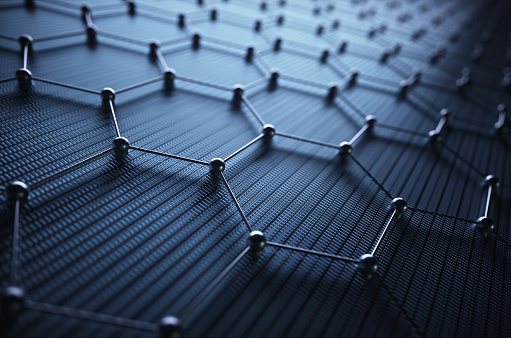
New research has revealed a promising new cancer drug that self-assembles into nanoparticles. This means it can deliver its payload into the body’s cells more efficiently, reducing the risk of side effects. The team of researchers from the University of Manchester have developed a new type of ‘smart’ drug, made up of molecules that not only target cancer cells but also self-organize into nanoparticles once inside the body. This means that the drug can be more effectively absorbed by the cells, making it more effective than other treatments.

Continue reading

In a major achievement for China’s growing space program, the Chinese government has successfully launched and tested a secret space plane. The spacecraft, which was launched on May 30th, is the first of its kind in the nation’s history and has the potential to revolutionize space exploration. This space plane has been designed to stay in orbit for an extended period of time, enabling it to take part in a variety of missions, such as conducting experiments in microgravity, surveying the Earth, and launching satellites.

Continue reading

A new study published in the journal Nature reveals that differential species proliferation is a key factor in the evolution of biodiversity. By studying the fossil record of the Cambrian Explosion, researchers have discovered that species which quickly replicated and diversified were more likely to survive, while those that reproduced slowly or not at all became extinct. This suggests that the rate of reproduction is an important factor in the survival of species and the development of biodiversity.

Continue reading

It’s no secret that modern dogs are a lot different than their ancient ancestors. But did you know that their brains have changed too? A new study published in the journal Nature Communications has found that modern dogs have larger brains than their ancient ancestors. The research team studied the skulls of ancient and modern dog breeds, and compared the size of their brains. They found that modern dogs had brains that were roughly 25% larger than their ancient counterparts.

Continue reading

The study of gene expression, or transcriptomics, is critical to understanding how organisms interact with their environment. With the help of new tools, scientists have been able to explore the complexity and messiness of gene expression in a variety of natural landscapes. In a new study published in Nature, researchers used transcriptomics to investigate the effects of environmental conditions on gene expression in different types of natural landscapes. Using data from over 500 samples of plant and animal tissue collected from a variety of habitats, they identified a number of genes that are highly expressed in certain natural landscapes and not in others.

Continue reading

In a recent breakthrough, scientists have discovered a new method to generate stunning 3D fractal images using superconductivity. This new method utilizes an effect called disorder-driven fractals, which is a new phenomenon created by the interaction between electrical currents and disorder in superconductive materials. The resulting images depict intricate patterns of light and dark, resembling abstract landscapes and landscapes of the natural world. This discovery has the potential to revolutionize the way we create and use fractal images, leading to a wide range of applications in the fields of physics, mathematics, and art.

Continue reading

Researchers have made an exciting breakthrough in understanding how cells react to physical disease. In a study published in Nature Communications, scientists from the University of Cambridge have revealed that cells respond to physical diseases with an inflammatory response similar to the one seen in an immune system response. This means that the body is trying to protect itself against the physical damage inflicted by the disease. The findings could open up new possibilities for treating physical diseases such as Alzheimer’s disease, cancer and heart disease.

Continue reading

Space scientists have recently gained important insight into the evolution of Mars, providing valuable data on the planet’s geologic processes. By combining data from NASA’s Curiosity rover with images from the Mars Reconnaissance Orbiter (MRO) spacecraft, scientists have been able to piece together a timeline of important events in Mars’ history. The data indicates that Mars has been shaped by its environment over billions of years, and that the planet’s evolution is far more complex than what was previously thought.

Continue reading

Harnessing the power of a machine to create nanosystems that are more energy efficient is a goal that scientists and engineers have been working towards for years. Recently, a breakthrough has been made in this area, with the development of a novel nanosystem that is capable of achieving up to 10 times more energy efficiency than traditional systems. This new nanosystem has the potential to revolutionize the way we use energy, providing us with a much more efficient and sustainable solution for powering our devices and other technologies.

Continue reading

Recent advancements in nanotechnology have led to the development of new materials with unique properties that can be used for a variety of applications. One such material is carbon nanotube (CNT) membranes, which are thin sheets of carbon nanotubes that have been modified with palladium and copper. These modified CNT membranes have been shown to have improved mechanical properties, allowing them to be used in a variety of applications, such as water filtration and desalination.

Continue reading

In a recent study conducted by the National Center for Education Statistics, it was found that there are many factors that contribute to the history scores of eighth graders. The study surveyed over one thousand students and found that family background, economic resources, school climate, and student engagement all have a significant impact on student success in history. In particular, the study found that students from high-income backgrounds had higher scores than students from lower-income households.

Continue reading

In a revolutionary new study, scientists have discovered a way to predefine the genes of an organism. This breakthrough could revolutionize the way we look at genetic engineering, allowing us to create customized organisms with predetermined traits. By manipulating the genome of an organism, researchers can now effectively “program” the genes of an organism to become whatever they want. This could open the door to a variety of new applications, from medical treatments to agricultural advances.

Continue reading

In recent years, there has been a shift towards more engagement in civics by young students. A new study by the National Academies of Sciences, Engineering, and Medicine has found that engaging in meaningful civic activities can foster a deeper understanding of civic life and the importance of civic engagement. This study surveyed over 2,000 high school students, who reported that engaging in activities such as voting, attending public meetings, and participating in community service were among the most impactful activities that shaped their understanding of civic life.

Continue reading

A new technology for surface coating materials has been developed by researchers from the University of Cambridge, which could revolutionise the way materials are used for electronic and photonic applications. The technology, which is based on a process called atomic layer deposition (ALD), will enable precise control of the thickness, composition, and structure of the coatings, enabling the production of thin layers of materials with a range of unusual properties. The technology is expected to open up a wide range of new possibilities for the development of materials with unique electrical, optical and thermal properties, which could be used in a variety of applications.

Continue reading

NASA has launched a new Super Pressure Balloon (SPB) that is set to revolutionize the way we study the atmosphere and gain a better understanding of our planet. The SPB is a unique design, consisting of a “balloon envelope” and a “load package” that are connected by a tether. The balloon envelope is made of a durable, high-strength plastic and is designed to be filled with helium gas to provide lift.

Continue reading

Nanotechnology has continued to revolutionize the medical industry, and a recent breakthrough could have a major impact on the efficacy of multidrug treatments. A team of scientists from the University of Gottingen have developed a multifunctional nanosystem that is capable of reversing multidrug resistance (MDR) in cancer cells. This nanosystem is composed of a drug-loaded nanocarrier, a molecular targeting agent, and a molecular switch. The nanocarrier contained a chemotherapy drug, which was released by the molecular switch when it was triggered by the molecular targeting agent.

Continue reading

For the first time, scientists have developed a device that combines aspects of both electronics and photonics using a single material – perovskite. This breakthrough could pave the way for the production of faster and more efficient electronic components, such as computer chips, lasers, and LEDs. The new device is made from a perovskite-based material, which has the potential to be used in a range of applications. It can be used to convert electrical signals into optical signals, or to convert optical signals into electrical signals.

Continue reading

A revolutionary new battery technology is coming to the world of energy storage: the battery beamline. This innovative system uses a beam of charged particles to store and transport energy more efficiently than traditional battery systems. The beamline acts as a conduit, allowing energy to move from one location to another without the use of wires or other bulky infrastructure. This system has the potential to revolutionize the way we store and use energy, and could be a game-changer for a wide range of industries.

Continue reading

Stem cells have long been heralded as the future of personalized regenerative medicine. A new breakthrough in stem cell research has been made in a study led by scientists from the University of California, Irvine and published in the journal Nature Medicine. The researchers have developed a new method to create personalized stem cells with the potential to be used in regenerative therapies. These stem cells are created from a patient’s own cells, making them more effective than stem cells derived from other sources.

Continue reading

Recently, researchers at the University of California, San Diego have been able to visualize PET degradation by bacterial enzymes in real time. This is an important step in understanding the biological processes involved in PET degradation, which could lead to more efficient recycling of PET plastics. By using 3D electron microscopy, the researchers were able to capture images of the PET degradation process in action. This breakthrough could be a major step forward in the development of efficient PET recycling.

Continue reading

A spacecraft bound for Jupiter is now free to continue its journey after engineers used an innovative technique to free a stuck antenna. The Juno spacecraft, which was launched in 2011, had been stuck in a looping orbit since its arrival in 2016, unable to move any closer to the planet due to a stuck antenna. After a few years of trying various techniques to free the antenna, engineers finally discovered that by harnessing the power of sunlight, they could finally make the antenna move.

Continue reading

A machine that can detect the effect of tooth brushing on dental health could be just around the corner. Scientists at the National Institute of Dental and Craniofacial Research (NIDCR) have developed a device that can measure the force of tooth brushing on the surface of teeth and gums, as well as the degree of tooth wear due to brushing. The device, dubbed the Healthy Teeth Machine, was designed to provide information to dentists and patients about the effectiveness of their brushing technique, as well as the potential for damage to their teeth.

Continue reading

The fight against antimicrobial resistance (AMR) has just taken a major step forward. Scientists have developed a new way to track AMR in Escherichia coli (E. coli) isolated from humans, animals, and food. This method, which was recently published in the journal Applied and Environmental Microbiology, could help in the global fight against AMR. This method uses a combination of genetic sequencing and bioinformatics to identify and track AMR in E.

Continue reading

A team of scientists from the University of California have discovered a rare set of fossils that helps to bridge the gap between two major stages of evolution. The fossils, which date back to the Ordovician period (460 to 445 million years ago), provide evidence of a transitional step between two major stages of evolution that had previously been disconnected. The fossils are significant because they provide insight into the evolutionary process that has taken place over millions of years, and how organisms have changed over time.

Continue reading

A new study has revealed a surprising discovery: a gene responsible for making plants more resilient to pathogens! The gene, known as the “Achilles’ Heel” gene, was identified by researchers at the University of Illinois who used a combination of genomics and genetics tools to make this groundbreaking discovery. This gene acts as a “guardian” against pathogens, allowing plants to resist disease and fight off infection. This is a major breakthrough for plant science, as it could lead to crops that are more resistant to disease and more productive overall.

Continue reading

Author's picture

Elizabeth Dubinskiy

I am high school student with a passion for materials science and engineering. Using this blog I would like to share my research and findings.

High School student

San Francisco Bay Peninsula