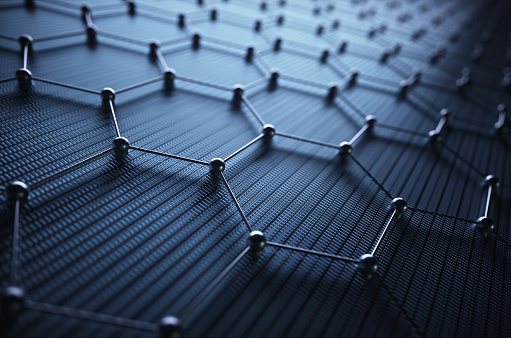
Today marks an incredible milestone in the tech world - a new extreme device has been developed that incorporates quantum technology into a smartphone! This is the first time a device of this kind has been developed, and it promises to revolutionize the way we use our phones. The new quantum device is incredibly powerful and will open up a range of possibilities for users. With its advanced technology, the device is expected to be faster and more efficient than ever before.
In a recent study, researchers have identified the Xerces blue butterfly as the first known species to go extinct as a direct result of anthropogenic activity. This butterfly, which was unique to the San Francisco Bay area, was driven to extinction by habitat destruction and pesticide use. The Xerces blue butterfly was a small, blue-colored butterfly that was considered an indicator species for the health of its environment. Its loss is a stark reminder of the devastating effects that our activities can have on the environment.
The Renaissance of Rioja: Spanish Wine Uncorks Ultrasound
The vibrant region of Rioja in Spain is known for its unique and high-quality wines. Now, the region is taking an innovative step towards making their wines even better. In an effort to improve wine quality, Rioja winemakers are turning to a unique technology: ultrasound.
The use of ultrasound in winemaking is nothing new. In fact, it’s been used for decades in order to remove unwanted particles from wines.
In a recent study published in the journal Nature, researchers have found that there is a growing prevalence of nature-related phobias in urban areas. This is most likely due to the fact that many people living in urban areas are increasingly disconnected from nature and have less exposure to natural environments. The study found that those living in the most densely populated urban areas had the highest levels of fear of nature-related activities.
In a breakthrough discovery, scientists have developed a new tool to help identify the thousands of polymers that remain to be discovered. The tool, developed at the University of Toronto, uses machine learning algorithms to explore the vast and largely unknown universe of polymers. This has the potential to revolutionize the way we think about polymer design and has applications in a number of different industries, from energy storage to drug delivery.
Have you ever wondered how buoyant spheres interact with each other? A recent study published in Nature Physics has uncovered the underlying dynamics of these objects. Researchers used stones as an analogue to explore the behavior of buoyant spheres. By studying the motion of the stones underwater, they discovered that the spheres interact with each other in an interesting and dynamic way. This could have implications for understanding the behavior of other buoyant objects, such as air bubbles, that are found in both natural and engineered systems.
Recent research has revealed that the effects of porosity on piezoelectric characteristics of polyvinylidene fluoride (PVDF) could play a major role in the development of new piezoelectric materials for many applications. PVDF is a type of polymer that has high piezoelectric properties, meaning it produces a voltage when subjected to mechanical stress. In the study, the team found that the porosity of the PVDF can have a significant influence on the material’s piezoelectric characteristics.
A new study has revealed how perovskite-modified surfaces can detect food contamination under visible light. The study, published in the journal Advanced Materials, found that perovskite nanocrystals on surfaces were highly responsive to food contaminants such as bacteria, viruses, and toxins. The study could have implications for food safety and help to reduce foodborne illness.
Perovskite-modified surfaces have the potential to revolutionize food safety. The nanocrystals are extremely sensitive to contaminants, and the detection can be done under visible light.
An amazing discovery has been made in Ancient California – a matriarchal society where daughters inherited land and wealth from their mothers! The discovery was made by archaeologists at the University of California San Diego, who uncovered a 1,000-year-old site in the Mojave Desert. Through their research, they determined that this society was highly unusual for its time. Instead of sons inheriting their mother’s property, daughters inherited the land and wealth.
A recent study has revealed an intriguing link between protein-bound DNA and toxicity in the environment. Researchers at the University of Maryland’s Institute for Bioscience and Biotechnology Research have discovered that certain proteins can bind to DNA molecules and cause them to destabilize, which can lead to toxic effects in the environment. This research could help us better understand how toxins like heavy metals and pesticides interact with DNA and could lead to new methods for preventing or reducing environmental damage.
Recently, the European Southern Observatory (ESO) announced plans for its revolutionary new ground-based telescope, the Extremely Large Telescope (ELT). The ELT will be the world’s largest optical telescope, featuring a 39-meter-diameter primary mirror comprised of 798 individual hexagonal segments. This massive telescope is designed to have groundbreaking resolution and sensitivity, allowing it to observe distant galaxies and stars, detect exoplanets, and probe the far reaches of the universe.
The ELT is set to revolutionize astronomy and its associated fields, such as astrobiology and cosmology.
The world of chemistry is abuzz with the potential of click chemistry, a tool that could unlock grand opportunities for research and development. Click chemistry is a technique that enables chemists to create complex molecules much more quickly and efficiently than ever before. It has been hailed as a revolutionary step forward in the field of organic synthesis. By combining simple, readily available building blocks with the click chemistry technique, chemists are now able to create molecules that are incredibly complex and diverse.
Chemists have recently developed a new reaction cascade that is capable of creating fluorinated molecules in a single step. This process utilizes a single catalyst to create compounds with multiple fluorine atoms, a process that was previously considered difficult and time consuming. The new technique is more efficient and cost-effective.
This breakthrough in chemistry research could have far-reaching implications for the production of pharmaceuticals, agrochemicals, and other fluorinated materials. By streamlining the production of fluorinated molecules, this technique could open up a world of new possibilities for scientists.
As the capabilities of technology are rapidly expanding, scientists are finding new ways to use the power of the microscopic world to our advantage. In a recent breakthrough, researchers have found a way to capture the immense potential of DNA by using microscopic tools. By utilizing the unique properties of DNA, which includes its ability to store large amounts of data and its incredible stability, these researchers have found a way to create a new type of data storage device that is incredibly efficient.
In a groundbreaking new study, scientists have found a way to use nanostructures to enhance the body’s immune system to fight cancer. These nanostructures, which are extremely small particles, are designed to interact with specific types of cells in the body to trigger an immune response that can go after and kill cancer cells. This new method of harnessing the body’s own natural defenses to combat cancer could revolutionize the way we treat this deadly disease.
In an exciting discovery for science, researchers have found a new DNA element that can control the inner workings of the cell. This new element, called a “transcriptional enhancer,” is responsible for turning certain genes on and off. The enhancer works by binding to certain DNA sequences and then interacting with the cell’s machinery. The exact mechanism of how the enhancer works is still a bit of a mystery, but researchers believe that the enhancer is essential for cellular development, and could potentially be used for medical treatments.
Today, scientists have discovered a novel function of molecular scissors known as tRNA-specific endonucleases. These enzymes are found in a variety of organisms, including humans, and are responsible for cutting tRNA molecules. This is the first time that researchers have been able to observe the exact process of how this enzyme works. The research team was able to capture the enzyme in action, exposing the tRNA molecules to the enzyme and then monitoring the reaction.
In the 21st century, code-breaking has become an increasingly complex and fascinating challenge. With the introduction of artificial intelligence (AI), code-breaking is now a whole new ball game. AI-based code-breaking is revolutionizing the code-breaking process, allowing for the breaking of codes that were previously thought to be unbreakable. By harnessing the power of AI, code-breakers are now able to use machine learning algorithms to analyze data and identify patterns in order to break codes faster and more efficiently.
A team of scientists from the University of Bristol have recently discovered a new protein that has the potential to revolutionize the way cells interact with cellulose. This protein, which they have called “cellulose-binding protein” (CBP), has the capability to bind to cellulose in a way that has never been seen before. The protein could be used to facilitate the movement of cellulose into and out of cells, which could have major implications for the production of biofuels and other materials.
Scientists have recently discovered a revolutionary new material that could potentially emit light faster than ever before. This material could enable machines to communicate at quantum speeds, which would open up a whole new world of possibilities for quantum computing and engineering. The material is made up of a combination of a rare-earth element and carbon nanotubes, and it has the potential to revolutionize the way machines communicate with one another.
Recent research has revealed an exciting new development in the fight against multi-drug resistant superbugs. Scientists have discovered a new type of antibiotic, which has the potential to be used in the treatment of these dangerous infections. This antibiotic works by targeting a specific enzyme found in bacteria, and appears to be effective against a broad range of superbugs, including those that are resistant to existing antibiotics. This discovery could provide a much needed solution to the growing threat of antibiotic resistance, and could help to reduce the number of lives lost due to antibiotic-resistant superbugs.
A recent breakthrough in cellular science is providing researchers with new insights into how cells fuel their growth. In a study published in Nature Communications, researchers from the University of California, San Diego have uncovered how cells produce energy for growth. They discovered that cells produce energy differently depending on the nutrients they consume. This knowledge may help researchers understand how cells use energy for growth, which could lead to better treatments for diseases such as cancer.
A recent study conducted by a team of researchers from the University of Cambridge has revealed a new discovery that could have important implications in the field of drug precursor biosynthesis. The study found that the movement of certain molecules across cell membranes is what “hinges” the biosynthesis of drug precursors. This is significant because it implies that the regulation of the biosynthesis process is dependent on the availability of these molecules.
Scientists have recently made a breakthrough discovery that could revolutionize the way we use graphene. Graphene, which is a single layer of carbon atoms, is one of the world’s strongest materials and has many potential applications in electronics and energy storage. However, until now, researchers have been limited by the fact that graphene is black in color, which means it is not suitable for certain applications. Fortunately, a team of researchers have now found a way to produce green graphene, which could open up new possibilities for this amazing material.
In a new study, researchers have successfully decoded the impact of high velocity impacts, bringing us one step closer to understanding the phenomenon. By using specialized imaging techniques, the team was able to capture the motion of the object in the fraction of a second after impact, allowing them to measure the force and pressure generated by the collision. This helps us to further understand the physics of high velocity impacts and how they can be used to design safer and more efficient structures.