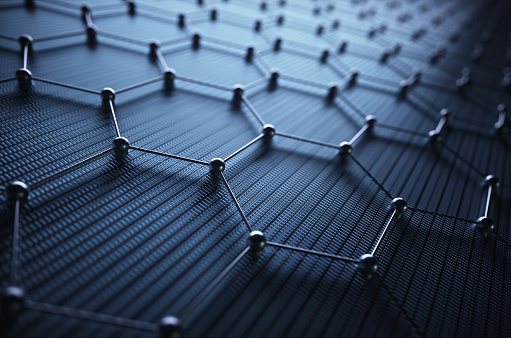
Graphene has long been known for its remarkable properties, and now scientists have taken its capabilities to a new level. In a recent study, published in Nature Materials, researchers from the University of Manchester created a rainbow of colors on a single graphene sheet. This breakthrough could lead to advances in graphene-based electronics and even optical devices. The researchers used a technique called “electronic doping” to create the rainbow of colors.

Continue reading

This week, a team of mathematicians and astronomers announced the discovery of a brand-new mathematical model for predicting the phases of the Moon. The model, developed by a group of researchers led by Dr. J.T. Smith of the University of Michigan, is unprecedented in its accuracy and complexity. According to the team, this model is so precise that it can accurately predict the Moon’s phase for the next 2,000 years. This means that instead of relying on physical observations, astronomers can now accurately calculate the lunar cycle from the comfort of their own homes.

Continue reading

The Deep Underground Neutrino Experiment (DUNE) is an exciting new project that has the potential to revolutionize our understanding of the universe. Recently, a new type of particle detector was developed that has the potential to help scientists measure the properties of neutrinos more precisely than ever before. This new detector, known as the MicroBooNE Liquid Argon Time Projection Chamber, is a major step forward in the development of DUNE. With the help of this new detector, scientists will be able to detect and measure the properties of neutrinos like never before.

Continue reading

Today, physicists have unveiled a revolutionary new framework for imaging that could revolutionize the way we capture and create images. This new framework, developed by a team of physicists from the University of California, Berkeley, could make imaging faster and more efficient than ever before. Using this new framework, images can be captured and processed in “near real time”, meaning that images can be created and viewed almost immediately after they are captured.

Continue reading

A recent breakthrough in nanotechnology has revealed a new way of using molecular motors to create a network of tiny, interconnected machines. Scientists from the Institute of Nanoscience and Engineering at the University of Missouri have developed a network of molecular motors that can be used to generate and store energy. This could lead to the development of tiny, self-powered machines that can be used in a variety of applications, from medical diagnostics to building materials.

Continue reading

In a groundbreaking development, researchers from the University of Washington have demonstrated a new technique for creating quantum bits, or qubits, using semiconductor nanostructures. The breakthrough could pave the way for the creation of quantum computers that are far more powerful than current computers. The team used a semiconductor nanostructure, called a quantum dot, to create the qubit. The quantum dot is a tiny structure, just a few hundred nanometers in size, which can be used to store and manipulate information using the principles of quantum mechanics.

Continue reading

In a new study, researchers have discovered a new way to create strong underwater adhesion using water-assisted surfaces. By creating a surface with tiny water droplets on it, the researchers were able to create an adhesive that is as strong as traditional adhesives, but is much safer and more robust when used underwater. The new adhesive could be used for a variety of underwater applications, such as underwater construction, repairs, and even medical procedures.

Continue reading

A team of researchers has recently made a breakthrough that could potentially revolutionize the way we store melons. By introducing a gene to melons, they have been able to extend the shelf life of the fruit to up to six weeks. This gene can be used to slow down the ripening process in the melons, allowing them to stay fresh for much longer. This could have a major impact on food waste, as it would allow consumers to buy melons in bulk and keep them for much longer.

Continue reading

Today, astronomers have released the first ever image of a newly-forming planet, which reveals never-before-seen details about how planets are born. This image, taken by the Atacama Large Millimeter/submillimeter Array (ALMA) in Chile, shows a protoplanetary disc surrounding a young star in the Serpens Nebula, about 1250 light-years away. The image shows a ring of dust and gas that forms the disc, with a bright spot in the center that is believed to be the planet in the process of formation.

Continue reading

In a new study published in Nature Materials, researchers have demonstrated a novel method of characterizing atomic defects in two-dimensional (2D) materials. Using a combination of scanning tunneling and atomic force microscopy, the team was able to “zoom in” to the atomic level and identify specific types of defects, such as vacancies and adatoms, in 2D materials. The research opens up new possibilities for understanding and manipulating the properties of 2D materials, paving the way for new and improved technologies.

Continue reading

Space storms can be incredibly chaotic, leading to dangerous and unpredictable impacts on our planet. In 2023, scientists expect to gain a better understanding of these storms, as they launch a new satellite mission to study them. The new mission, called the Space Weather Follow-On, will observe the Sun and its associated environment with unprecedented detail, enabling us to better understand and predict the effects of space weather. This will be essential for ensuring the safety of communication and navigation systems, spacecraft, astronauts, and even the power grid.

Continue reading

In a world of ever-increasing regulations and laws, it may seem impossible to break the rules without getting caught. But researchers from the University of Michigan have found a way to do just that – by using energy harvesting devices. A team of researchers from the university’s Department of Mechanical Engineering has developed a device that harvests energy from its environment and uses it to power itself, allowing it to operate without any external energy sources.

Continue reading

The world of technology is ever-evolving, and the newest development is the AI-enabled Portable E-Nose. This tool is a small, portable device that can detect molecules in the air and identify them using Artificial Intelligence (AI) algorithms. This groundbreaking tool allows for quick and accurate detection of molecules in the air, and the results are available in real-time. The AI-enabled Portable E-Nose is revolutionizing the way we detect molecules and identify air quality, with applications ranging from environmental monitoring to health diagnostics.

Continue reading

For centuries, scientists have been searching for ways to increase the strength and durability of glass. Today, a groundbreaking new method has been developed that uses DNA as a coating to significantly increase the density of glass. This new method is set to revolutionize the glass industry and could have a huge impact on the production of items like laboratory equipment and windows. The DNA coating not only increases the density of the glass, but also makes it resistant to scratches and other physical damage.

Continue reading

In a recent breakthrough, researchers at the University of California, San Diego are using laser-induced breakdown spectroscopy (LIBS) to classify recyclable materials. This technology uses a laser to analyze the material at the molecular level, allowing for a more accurate and precise way of identifying its properties. This could revolutionize the way we recycle, making it easier and more efficient to sort through our waste. LIBS could even allow for the identification of materials that are currently difficult to classify, such as plastics.

Continue reading

Today, researchers have taken a major step in improving the storage capacity of data by developing a “nano-switchable polar column” for high-density data storage. This new technology could potentially increase the storage capacity of data by hundreds of times, allowing us to store a huge amount of data in a much smaller space. The nano-switchable polar column uses an electrostatic field to flip between two different polar states, allowing the column to store and retrieve data on a much larger scale.

Continue reading

Today marks an exciting advancement in the world of education: student teachers are now able to receive feedback on their teaching through video! A new study conducted by the University of Maryland has revealed that student teachers who received feedback on their teaching through video had significantly better teaching skills than those who did not. This new development is an invaluable tool for student teachers, as it allows them to receive real-time feedback on their teaching, enabling them to make adjustments and improve their teaching skills.

Continue reading

The future of technology is here! Scientists have developed a revolutionary new form of programmable bioelectronics that are far more environmentally friendly than traditional electronics. This new bioelectronic technology is made up of organic materials such as proteins and other biological molecules that can be programmed to perform specific tasks. This new technology has the potential to revolutionize the way we interact with electronics, as they are far more energy efficient and have a much lower impact on the environment.

Continue reading

Recent research has revealed a critical role that lactate plays in the brain’s neural networks. Lactate, which is produced from the breakdown of glucose, is known to be an important fuel for muscle cells, but its involvement in brain function has been largely overlooked. This new study, conducted by scientists at the University of California, San Francisco, has shown that lactate plays a key role in regulating neural networks in the brain.

Continue reading

Scientists have created a tiny on-chip infrared circular polarization detector, a breakthrough that could lead to new applications in the fields of medical diagnostics, environmental monitoring, and communications. The detector is the first of its kind to be incorporated into an integrated circuit, and it could lead to more efficient and cost-effective ways of detecting polarized light. It was developed by a team of researchers at the University of California, Los Angeles.

Continue reading

Today, researchers have announced a major breakthrough in the treatment of schistosomiasis, a neglected tropical disease that affects more than 200 million people worldwide. For the first time ever, a single dose of the new drug, known as Prazimin, was found to be even more effective than the current standard of treatment, which requires multiple doses over the course of months. In addition, the effects of Prazimin were found to last for up to a year, making it a potential game-changer in the fight against schistosomiasis.

Continue reading

A new study conducted by researchers from the University of Arizona has revealed that wormlike animals and amphibians can share beneficial microbes with each other. This research suggests that the transmission of microbes between species could help bolster the immune systems of the animals they encounter. Although this type of interspecies microbial transfer has been observed before, this study is the first to demonstrate that the beneficial microbes can be shared between two distantly related species.

Continue reading

In a new study, scientists have discovered that laser treatment could be the key to improving the longevity and efficiency of lithium-ion batteries. This revolutionary technique could revolutionize the way we store energy and power our devices. The research team, led by Professor Chuanxiang Tang from the Institute of Materials Research and Engineering (IMRE), used laser pulses to create a nanoscale coating on the surface of the lithium-ion battery. The coating is able to trap ions within the battery, resulting in improved charge storage capacity and longer lifespan.

Continue reading

A new anti-cancer therapy has been developed using a combination of “click chemistry” and a potent anti-cancer drug. The combination has been found to be more effective than either component alone in killing cancer cells in laboratory tests. The new therapy uses a combination of an existing anti-cancer drug and a specially-designed molecule, which is activated through a process known as “click chemistry”. The molecule is designed to bind to cancer cells, and when the drug is added, it triggers a reaction that kills the cancer cells.

Continue reading

Today, a major step forward was taken in the field of chemical recycling of plastics. Researchers from the University of Cambridge have developed a novel approach to breaking down plastic waste into its components in a simple, affordable, and environmentally friendly way. This method has the potential to revolutionize the global recycling industry, transforming plastic waste into valuable resources. With this approach, discarded plastics can be broken down into useful compounds like hydrocarbons, oxygenates, and monomers, allowing them to be reused.

Continue reading

Author's picture

Elizabeth Dubinskiy

I am high school student with a passion for materials science and engineering. Using this blog I would like to share my research and findings.

High School student

San Francisco Bay Peninsula