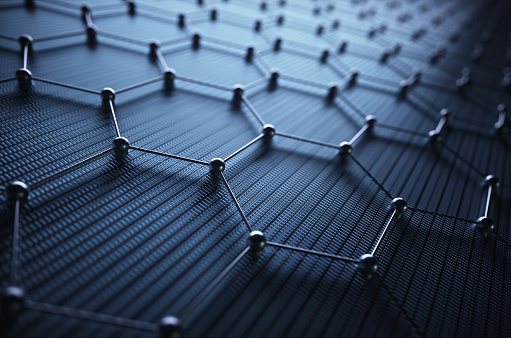
Scientists have developed a new kind of material inspired by the wings of a butterfly that could be used for passively cooling buildings. The material consists of a thin layer of butterfly wings, coated with a layer of carbon nanotubes that reflect sunlight while emitting heat in the form of infrared radiation. This allows the material to cool buildings without the need for energy-intensive air conditioning. The material is both highly effective and aesthetically pleasing, making it an attractive choice for architects and engineers looking for solutions to reduce energy use.

Continue reading

A new path to defeating crop-killing gray mold has been discovered by researchers at the University of California, Davis. The team found a way to manipulate a particular gene in a plant’s genome that can make it more resistant to the devastating fungal disease. This could potentially lead to significant food security gains for farmers around the world. The research could also have implications for the medical field, as gray mold is known to cause respiratory illnesses in humans.

Continue reading

Today marked a monumental milestone in the scientific community as researchers have successfully predicted the structure of a large protein in a mere matter of hours. The protein, called “KaiA”, was solved by a team of scientists at the University of California, San Diego, who used a combination of machine learning and high-performance computing techniques to determine its 3D shape. This breakthrough is especially exciting as it opens the door to further research into understanding how proteins interact with each other and how they may be manipulated to treat diseases.

Continue reading

Scientists have recently discovered a new material that could revolutionize the way we think about superconductivity. The material, known as TBOE, shows some remarkable properties that make it more advantageous for superconductivity than materials previously used. TBOE has a much higher critical temperature than other materials, which means it can be used to maintain superconductivity at higher temperatures. It also has a much wider range of parameters for superconductivity, so it can be used in a variety of applications.

Continue reading

A recent study has revealed an exciting breakthrough in the field of mathematics: You can now buy lottery tickets with math! Researchers from the University of Sheffield in the United Kingdom have developed a mathematical algorithm that can be used to identify and select numbers that are more likely to win a lottery jackpot. The algorithm takes into account variables such as the numbers that have been drawn in the past, as well as the probability of certain combinations occurring.

Continue reading

Scientists have recently uncovered a previously unknown spectrum of light. This new spectrum, encompassing ultraviolet and extreme ultraviolet light, could open up a new world of opportunity for the field of astronomy. The discovery, made by a team of international scientists, is set to revolutionize our understanding of the universe. With the introduction of this new spectrum, astronomers now have the ability to observe astronomical objects in a whole new light.

Continue reading

A breakthrough in the field of superconductivity has been achieved at Southeast University in Nanjing, China. Researchers have measured a zero-resistance state in a new LK 99 replication. This discovery could potentially revolutionize the way we transport energy and revolutionize the way we look at electricity. Superconductivity is a state of zero electrical resistance, meaning that electrons can flow through a material without losing any energy. This discovery has the potential to drastically reduce energy costs and make power transmission more efficient.

Continue reading

A new nanolattice structure made of glass has been developed that is four times as strong as steel while being five times lower in density. This new material could revolutionize how we build things, from aircraft to skyscrapers. It is created by using a combination of extreme heat and pressure to fuse together millions of extremely fine glass strands. The result is a strong, lightweight, and incredibly durable material that could be used for a wide variety of applications.

Continue reading

A new method of measuring soil carbon has been developed that promises to be both more accurate and more efficient than current methods. The new method, called the Carbon Intensified Soil Sampling (CISS) method, uses a series of short core samples to measure soil carbon. The method is designed to provide a more accurate assessment of soil carbon than traditional methods, which rely on single core samples or composite samples. The CISS method was developed by researchers at the University of Wisconsin-Madison and the USDA Agricultural Research Service.

Continue reading

Recently, scientists have made an incredible breakthrough in the field of plastic recycling. A new process has been developed that can convert plastic waste into useful building blocks using a combination of solar energy and a renewable energy source. This process, called “solar-driven conversion of plastics to blocks” (SCoPB), is an environmentally friendly and cost-effective way to convert plastic waste into a useful material. Not only does this process help to reduce plastic waste in our environment, but it also produces building blocks that can be used to construct a wide variety of structures, from homes to roads.

Continue reading

Airbus and Voyager Space Holdings have announced their partnership to bring the world’s first commercial space station into orbit. This station, named Voyager Station, will be the first commercial space station to offer long-term stays and will be located in low Earth orbit. The station will provide a platform for research, industrial manufacturing, tourism, and more. This partnership between Airbus and Voyager Space Holdings is a major step towards the commercialization of space.

Continue reading

For those looking to make a positive change in the world of agriculture, a recent breakthrough in the development of a new alternative to phosphate fertilizer may be the answer. Scientists have developed a biochar-based fertilizer which not only provides the same benefits as traditional phosphate fertilizers, but also helps to mitigate environmental damage caused by its use. The biochar-based fertilizer is made from a combination of biochar (charcoal) and organic matter, and it has the potential to reduce nutrient runoff and greenhouse gas emissions associated with traditional phosphate fertilizers.

Continue reading

The problem of cadmium in cacao is often sensationalized in the media, yet in reality, the levels of this toxic metal found in cacao are actually very low. A new study from the University of California, San Diego revealed that the levels of cadmium in cacao beans were only slightly higher than those found in other food products, and far below the levels established by the World Health Organization as harmful to human health.

Continue reading

Are you ready to take cooking to the next level? Nature has just unlocked the secret to the ultimate kitchen chemistry set with a new discovery. Scientists have found a way to use chemical reactions to cook food at the molecular level. This could revolutionize the way we prepare meals, leading to faster, healthier and more delicious dishes. The key to this new cooking method lies in a process called “synthetic glycosylation,” which allows for precise control over the chemical reactions that take place in the preparation of food.

Continue reading

An exciting discovery has been made in the night sky! Astronomers have found a new eclipsing binary star cluster located in the constellation of Scorpius. This cluster is called NGC 6124 and is located about 7,800 light-years away from Earth. The cluster is composed of two stars that orbit each other, with one star periodically blocking the light from the other and causing an eclipse. The cluster is estimated to be just over 1 million years old, and is one of the few known eclipsing binary star clusters in the Milky Way.

Continue reading

It’s time to look up! The Perseid meteor shower is coming up the night of August 12th. This event is popular amongst stargazers for a few reasons. Not only is it one of the brightest meteor showers of the year, but it’s also one of the most active. In fact, it’s possible to see up to 60 meteors per hour during its peak! The best time to view this event is between midnight and dawn when the sky is the darkest.

Continue reading

In a recent study, researchers have uncovered evidence that suggests that ultra-marathon running may be an evolutionarily beneficial trait. The study, conducted by researchers from the University of Copenhagen and published in the journal Nature Communications, used computer simulations to explore the potential evolutionary benefits of ultra-marathon running. Their findings suggest that humans who are capable of running long distances may have an evolutionary advantage over those who are not. This advantage is due to the physical and mental endurance required for such activities, which would have allowed our ancestors to outrun predators, hunt for food over large distances, and to migrate to new habitats.

Continue reading

In a new breakthrough, scientists have developed an interactive network capable of capturing gas at high altitudes. The new network consists of tethered helium balloons that are connected to an array of sensors and receivers. When a gas molecule passes through the network, the sensors measure its characteristics and the receivers send the data back to the ground. This revolutionary technology can provide invaluable insight into the composition of the upper atmosphere.

Continue reading

For many years, radar technology has been limited by a century-old trade-off between wavelength and distance. Radar systems that use shorter wavelengths can detect objects at farther distances, but they are more difficult to build and require more power. In a breakthrough development, researchers have developed a new radar system that eliminates this trade-off, allowing users to detect objects at farther distances without sacrificing power or complexity. This new technology could revolutionize the way we use radar, and could have far-reaching applications in areas such as safety, security, and navigation.

Continue reading

Recent studies have shown that secondary school students are facing increasing levels of difficulty in their studies. This difficulty can be attributed to the growing expectations placed on students in a competitive academic environment, as well as the increasing complexity of the curriculum. In this article, we will analyze the reasons for this difficulty and consider what can be done to help students navigate the growing challenges of secondary school. We will also look at the possible effects of this difficulty on students and their academic performance.

Continue reading

Recent research by scientists at the University of California, Berkeley, has revealed the potential for materials to exist in immutable topological states, and for these states to be entangled with each other. This means that the properties of the material are determined by the properties of the underlying topological state, and that the material can’t be changed without affecting the topology. This could have major implications for the development of new materials, as it could enable the creation of materials that remain stable over a variety of conditions and have potentially more advanced properties than those currently available.

Continue reading

A recent breakthrough in the field of nanotechnology has allowed scientists to create a bubble-like membrane around molecules and viruses. This membrane, which is made up of a material called graphene, is incredibly thin and flexible, yet strong enough to protect the molecules and viruses inside. It is also able to interact with the molecules and viruses in a way that allows them to be manipulated and studied in a more controlled environment.

Continue reading

It’s official: the age of quantum computing is here! A team of researchers at the University of California, Berkeley have recently developed a new type of quantum computer that is capable of processing information faster than any classical computer ever has before. This technology is expected to revolutionize many industries, from finance to medicine. With quantum computing, massive amounts of data can be processed in fractions of a second, leading to more accurate and timely decisions.

Continue reading

In a recent breakthrough, scientists have developed an innovative technique for creating artificial crystalline structures at the nanoscale. The method, termed “steric zipper interactions,” is based on the self-assembly of peptide molecules. By manipulating the length of the peptides, scientists are able to create an array of intricate structures, from flat sheets to complex networks. The technique is being heralded as a major advance in nanotechnology, as it paves the way for a new generation of nanostructures with unprecedented levels of control.

Continue reading

Scientists have recently discovered a new type of ultrafast motion in layered materials. By using x-ray diffraction, they were able to observe how the layers of atoms of these materials move together in a matter of picoseconds, a millionth of a millionth of a second. This new type of motion has been named “corrugation” and has the potential to be used in advanced data storage and computing technology. This discovery could open up new possibilities for faster and more efficient computer components, as well as improved storage solutions.

Continue reading

Author's picture

Elizabeth Dubinskiy

I am high school student with a passion for materials science and engineering. Using this blog I would like to share my research and findings.

High School student

San Francisco Bay Peninsula