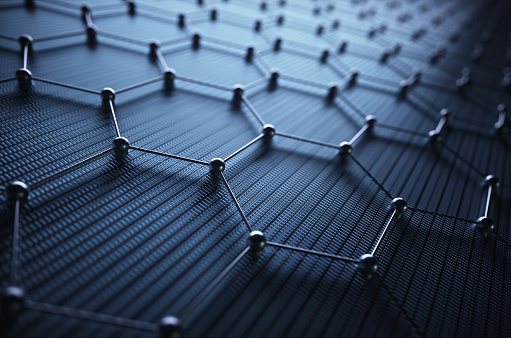
Today, researchers from the Massachusetts Institute of Technology (MIT) have announced a major breakthrough in the field of microscopy. They have developed a technique for visualizing microscopic phases of matter in a way that has never been done before. Called “Magic Angle Bilayer,” this technique allows researchers to observe and measure the behavior of electrons in the small-scale world of nanoscale materials. This breakthrough could have far-reaching implications for many areas of research, including the development of new materials, electronics, and nanotechnology.

Continue reading

In a first of its kind collaboration, historians and literary scholars are teaming up to explore the works of William Shakespeare. As part of a new project, scholars from the Universities of Oxford, Edinburgh, and Warwick have joined forces to focus on the playwright’s life, works, and influence in the past and present. The project, titled “Shakespeare in History,” will bring together literature and history in an effort to gain new insights into Shakespeare’s works.

Continue reading

Drones and artificial intelligence are revolutionizing the way we interact with and manage forests. A new study, conducted by the University of California, Berkeley, and published in Nature, has shown that forest drones with AI capabilities can detect tree health in real-time, allowing for more efficient and effective management of forests. The team used drones equipped with cameras, sensors, and AI models to monitor forests in California. The drones were able to detect early signs of insect infestation, disease, and drought-related stress in the trees.

Continue reading

Have you ever heard of supercooled droplets? These mysterious phenomena have baffled scientists for years, but new research is beginning to unravel their secrets. Supercooled droplets are liquid droplets that don’t freeze even at temperatures below the freezing point of water. While we don’t yet fully understand why this happens, we are beginning to get a better picture of their behavior. For example, recent research has found that these droplets can form a glass-like state when exposed to certain conditions.

Continue reading

A new study has revealed that the inclination of a description can have a significant impact on how consumers perceive a product. In the study, researchers found that when a product was described as “inclined” rather than “sloped,” consumers rated the product more favorably. This suggests that the way products are described can influence how people perceive them. In terms of marketing, this could be a useful tool for businesses to use when promoting their products.

Continue reading

Are you looking for ways to better understand the environment and its natural processes? Recently, researchers have developed a new technology that is revolutionizing how we measure hydroxyl radicals in real-time. This technology, known as time-resolved hydroxyl radicals, utilizes a specialized laser to detect and measure hydroxyl radicals in the atmosphere. Hydroxyl radicals are essential to our environment, as they are responsible for many natural processes, such as the breakdown of pollutants.

Continue reading

Urban agriculture has the potential to play an important role in the global food, energy, and water (FEW) nexus. This type of agriculture involves growing food, energy, and other resources in urban areas, such as rooftop gardens, vertical farms, and green walls. Urban agriculture is becoming increasingly popular due to its ability to increase local food production, reduce energy costs, and conserve water. With the right technology and policies in place, urban agriculture can help cities become more sustainable and resilient.

Continue reading

For parents, it’s important to keep up with the latest advancements in technology. Artificial Intelligence (AI) is becoming increasingly important in our daily lives and is now being used to help children learn and develop. In this Q&A, we’re talking to Dr. Ravi Behl, a professor at the University of Washington’s Information School, about why AI is an important tool for having meaningful conversations with kids. Dr. Behl explains: “AI has the potential to open up new possibilities for conversations with children.

Continue reading

We have good news for those who struggle with keeping their metal objects from rusting - “smart rust” is here! Smart rust is a new type of magnet that can be used to stop rust from forming on metal objects. This new type of magnet has the potential to revolutionize the way we keep our metal objects from rusting. With smart rust, metal objects can be protected from rust without the use of chemical rust preventatives or coatings.

Continue reading

Today, NASA announced a new mission to the moon: the Lunar Trailblazer. This cutting-edge payload will be carried to the moon aboard a spacecraft, and will conduct a range of scientific investigations on the moon’s surface. The payload’s primary mission is to map the moon’s surface, providing high-resolution images and data on the composition of the moon’s surface. This data will be used to help scientists better understand the moon’s geology, and will aid in the upcoming Artemis mission, which will send the first woman and next man to the moon.

Continue reading

A new study published in the journal Science reveals an exciting discovery about a type of magnetic skyrmion known as a phason skyrmion. For the first time, researchers were able to measure the asymmetric dispersion of the phason skyrmion, finding that it is significantly different from other types of skyrmions. This discovery brings us one step closer to understanding the nature of this fascinating material and could potentially lead to new applications in spintronics and data storage.

Continue reading

Recent advances in metasurface technology have made it possible to create water-soluble molds that could revolutionize the way we make and use products. Metasurfaces are nanoscale materials with the ability to manipulate light in ways that were previously impossible. These molds can be used to create intricate shapes and patterns that are impossible to achieve with traditional manufacturing methods, such as 3D printing. By using water-soluble molds, the production process can be significantly streamlined, resulting in more efficient and cost-effective products.

Continue reading

In recent years, sustainability and space exploration have become intertwined more than ever before. With the growing awareness of the environmental impact of space exploration, the topic of sustainability has become an increasingly important part of the conversation. In this Q&A, we discuss how sustainability and space exploration can work together to aid in Earth’s efforts to protect the environment. Dr. Rachel Armstrong, a professor at the University of Greenwich and a leading expert on sustainability in space exploration, shares her insights on the topic.

Continue reading

Scientists have made a breakthrough in the field of quantum materials, as researchers have developed a way to create quantum materials that can operate at room temperature. This breakthrough could open up a whole new range of possibilities for quantum computing and other applications. Quantum materials are materials that are able to store quantum information, which can be used in computing, and are the basis for many of the most advanced technologies.

Continue reading

Researchers have made a breakthrough in the field of imaging technology, creating a high-speed super-resolution imaging system which can capture large fields of view in a fraction of the time. This new technology could have a wide range of applications, from medical imaging to surveillance and astronomy. The system is able to take images from multiple perspectives at the same time, allowing for detailed images of large areas to be taken in just seconds.

Continue reading

In a momentous step towards exploring the far reaches of the universe, scientists have developed robotic appendages capable of navigating the harsh conditions of Mars. Developed by the University of California, San Diego, the team designed a robot arm and two mobile robot legs that are small enough to fit into the narrow crevices and caves of the red planet. The robot appendages are powered by a single onboard computer and use a variety of sensors to traverse the terrain.

Continue reading

Russia is set to launch a Luna-Glob probe to the moon in 2023, with the goal of placing the spacecraft in a lunar orbit. The mission will mark the first time that a Russian spacecraft has orbited the moon since the early 1970s. The Luna-Glob probe will carry a variety of scientific instruments, including a high-resolution camera and a spectrometer for studying the composition of the lunar surface. Once it enters lunar orbit, the probe will study the moon’s gravitational field, as well as its surface features and mineral composition.

Continue reading

In a revolutionary breakthrough in synthetic biology, scientists have developed an artificial metabolic pathway that can convert carbon dioxide into electricity. The pathway, which was engineered by researchers at the University of Cambridge, works by using carbon dioxide as a fuel source and then converting it into energy. The scientists believe this discovery could lead to a new form of renewable energy and provide a way to reduce emissions of carbon dioxide into the atmosphere.

Continue reading

Today, scientists have broken new ground in the field of magnetism by creating the world’s first room-temperature superconductor. This new material has the potential to revolutionize everything from power generation to transportation and computing. By using a combination of chemical and magnetic techniques, the researchers were able to create a material that loses all electrical resistance at room temperature, allowing it to conduct electricity with near-perfect efficiency. This new material could drastically reduce the cost of electricity transmission and storage, making it much easier to achieve a sustainable energy future.

Continue reading

Scientists have recently revealed a new sensory protein that is small enough to fit within a nanometer! This incredible discovery is paving the way for a new understanding of how our bodies sense and react to the environment around us. The protein, called S1P, is about 500 times smaller than the average human cell, making it the smallest sensory protein ever discovered. Scientists believe this protein could be used to develop new treatments for neurological and autoimmune diseases.

Continue reading

We all know sourdough bread as a delicious treat, but did you know that it has been around since ancient times? In the past year, the popularity of sourdough has skyrocketed as people have been stuck at home due to the pandemic. Making sourdough bread is not only a great way to pass the time, but it is also a delicious and unique way to make bread. Sourdough bread is unique because it is made with a sourdough starter, which is a mixture of flour and water that is fermented over time, and this gives the bread its unique flavor.

Continue reading

In a recent study published in the journal Nature Materials, scientists have revealed an amazing discovery: the beak of a hummingbird is made of a unique material that could be used to create micro-machines in the future. The material, which is a combination of proteins and minerals, is incredibly strong and lightweight, and could be used to create tiny robots that could perform tasks in areas such as medicine and engineering.

Continue reading

In a recent study published in Nature Communications, researchers conducted a reanalysis of the Ötzi the Iceman’s genome, providing new insights into the 5,300 year-old iceman’s appearance, traits, and ancestry. Ötzi was discovered in 1991 preserved in a glacier and is the oldest known human mummy. The new reanalysis of the iceman’s genome revealed that he had a darker complexion than previously thought, with a likely eye color of brown. Additionally, researchers suspect that the iceman had the genetic traits for lactose tolerance, a balding gene, and the ability to digest the amino acid isoleucine.

Continue reading

A new study from the University of California, Riverside, has revealed that the space economy is outputting less and less with each passing year. The study, which tracked the output of the space economy over a five-year period, found that while the output of the space economy continues to grow, it has been shrinking in terms of its overall size. This is due to the fact that the number of new space exploration and development projects has been declining in recent years, resulting in fewer resources being available to the space economy.

Continue reading

Agroforestry is a sustainable land management practice that combines the cultivation of trees with other crops. In a recent study, researchers from the University of California, Davis, have gained new insight into the early history of agroforestry in tropical areas. Their findings suggest that agroforestry was practiced as early as the fifth century A.D., and may have been an important part of early agricultural systems. This new research provides valuable insight into the early history of agroforestry in tropical areas.

Continue reading

Author's picture

Elizabeth Dubinskiy

I am high school student with a passion for materials science and engineering. Using this blog I would like to share my research and findings.

High School student

San Francisco Bay Peninsula