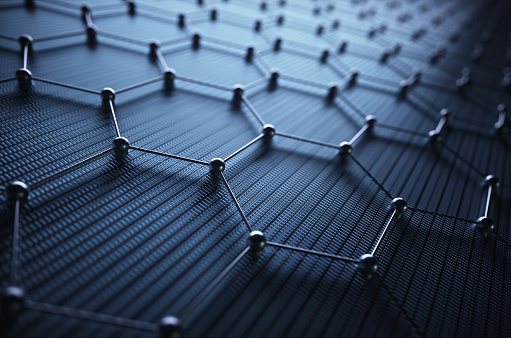
In recent years, scientists have been making great strides in understanding the complex molecular dynamics of proteins. Through the use of powerful technologies, researchers are now able to gain a better understanding of the intricate interactions that occur within these molecules. This newfound knowledge is essential to finding new treatments for a wide range of diseases and disorders. In this article, we will discuss the progress that has been made in deciphering the molecular dynamics of proteins and how this knowledge can be used to develop new treatments.

Continue reading

Recently, scientists have made a massive breakthrough in the field of black hole research. Using powerful supercomputers, they have been able to simulate the behavior of black holes for the first time ever. These simulations showed that black holes can be as small as one-tenth of a solar mass. This is an incredibly important discovery that will help scientists to better understand the physics of black holes and how they interact with the rest of the universe.

Continue reading

As the world’s rainforests continue to shrink, researchers are learning more and more about the vast diversity of animals living within them. In a recent study, scientists used a technique called swabbing to survey the biodiversity of animals living inside the rainforest of Costa Rica’s La Selva Biological Station. By swabbing the fur and skin of animals, the researchers were able to capture a wide range of microbial communities associated with a variety of species.

Continue reading

The future of battery technology is looking brighter than ever. A new strategy for creating high-performance lithium metal batteries has been developed by researchers at the University of Cambridge. Using a combination of innovative materials and cutting-edge design, these batteries could revolutionize the way we power our electronic devices. The team created a new architecture for the batteries, using a combination of a solid electrolyte and an anode that is made of a lithium-rich material.

Continue reading

In a world of increasingly antibiotic-resistant bacteria, scientists have found a powerful new weapon in their fight against superbugs: microbial dark matter. This mysterious group of microbes, which has been largely ignored until now, could offer a new way to combat drug resistance and even treat some of the most deadly infections. In a recent study, researchers from the University of Arizona identified several new bacterial species that could be used as antibiotics, and they believe that more could be discovered in the future.

Continue reading

Today, a team of scientists have developed a nano-sized sensor that will revolutionize high-precision microscopy. This new sensor is capable of detecting objects at nanoscale resolutions, and is the first of its kind to be able to measure the forces between objects at such a small scale. With its ability to measure the forces between objects, the sensor can help researchers better understand the physical interactions between molecules. This could lead to a better understanding of how molecules interact with each other to form larger complex structures, and could give us insight into the physical properties of matter.

Continue reading

In a groundbreaking development, a team of scientists from across the globe has unveiled a revolutionary new form of transportation: maglev (magnetic levitation) transportation on the moon. This technology is set to revolutionize lunar logistics, making it easier and faster for humans to explore and utilize the moon’s resources. With maglev technology, a spacecraft can be propelled over the moon’s surface at speeds up to hundreds of kilometers per hour. This revolutionary new form of transportation could have a huge impact on lunar exploration and exploitation, allowing scientists to quickly and easily access difficult or far away regions of the moon.

Continue reading

Scientists have recently discovered a wild tobacco plant with two mutations that make it much more susceptible to insect damage than its peers. This new development could be a game changer for farmers who have long been battling with tobacco pests, and could allow them to produce higher yields at a lower cost. The wild tobacco plant was found to be much more susceptible to insect damage due to two mutations on its two copies of the Nicotiana attenuata gene.

Continue reading

Recent advancements in electrocatalytic ammonia synthesis could revolutionize the way we think about energy production. Ammonia is one of the most important chemicals used in the production of fertilizers, and the increased efficiency of electrocatalytic ammonia synthesis could reduce the energy needed to produce it. This could lead to a decrease in greenhouse gas emissions from fertilizer factories, and provide an important step forward in the fight against climate change. Moreover, electrocatalytic ammonia synthesis could be used to store renewable energy, making it a crucial part of a sustainable future.

Continue reading

Scientists have recently made a breakthrough in the field of superconductivity, with the development of a room temperature superconductor. This new material, called LK Quantum, is a combination of graphene and lanthanum hydride, and is the first room temperature superconductor to be developed. This technology could revolutionize the way we use energy, making it more efficient and affordable. The potential applications of this technology are immense and could make a huge impact on modern life.

Continue reading

In a recent study, experts have found that many children are lagging behind in key skills such as communication, problem-solving, and social interaction. The study, which was conducted by a team of researchers from the University of Leeds, found that children aged three to four years old are less able to communicate effectively, solve problems, and interact socially compared to their peers in the 1980s. The findings suggest that parents and educators need to be more aware of the importance of developing these key skills in young children.

Continue reading

Chicago stargazers have been dealing with a surprising, yet unpleasant, side effect of the pandemic: increased light pollution and smoke from the wildfires that have been obscuring the night sky. The Chicago Astronomer, a local astronomy club, has noticed a significant decrease in the visibility of stars in the city, which can be attributed to the increase in light pollution. The smoke from the wildfires has added to the problem, making it even more difficult to observe the stars.

Continue reading

A recent study conducted by citizen scientists has revealed a startling new discovery: the common wasp is actually three distinct species! This study, conducted by scientists from the University of Bristol and the Natural History Museum, collected data from over 1000 volunteer citizen scientists across the UK. Using DNA sequencing, the scientists were able to distinguish the three species of common wasp and discovered that each species has evolved to specialize in different food sources.

Continue reading

Bio-based waterborne polyvanillin-butyl acrylate/MXene coatings have been developed by a team of researchers from the Max Planck Institute for Polymer Research. This new coating is able to provide a protective layer that is both non-toxic and environmentally friendly. The coating is made from natural materials such as vanillin and butyl acrylate, and is reinforced with MXene nanomaterials. The researchers believe that this new coating could be used in many different applications, from food packaging to medical devices.

Continue reading

A major breakthrough in the field of dermatology was recently announced by a group of experts in the field. After over two years of work, the dermatology experts have reached a consensus on the anatomy of human skin. This new consensus is the first of its kind and is set to revolutionize the field of dermatology. The experts developed a consensus that provides a detailed description of the five layers of human skin and the various cells and structures contained in each.

Continue reading

Seismology—the study of earthquakes—has been used to explore the Earth’s interior for decades. Now, scientists are turning their attention to another planet: Venus. A team of researchers has developed a new kind of seismometer that could be used to probe the core of Venus, and uncover some of its deepest secrets. The new seismometer is designed to measure seismic waves that are generated by events such as volcanic eruptions and meteorite impacts.

Continue reading

Scientists are excited about the prospect of China’s Tiangong Space Station, an ambitious project that will involve launching a large space station into orbit around the Earth. The station, which is expected to be completed in 2023, will be equipped with laboratories and living quarters that will enable astronauts to conduct experiments and other activities in space. In addition to its scientific and technological applications, the station is also seen as an important symbol of international cooperation.

Continue reading

It looks like we are not the only ones who have been exploring the universe recently. A team of researchers from the University of California, Berkeley, have discovered an astonishing transition of animals between Europe and Australia over the past two million years. The study, published in the journal Nature , has uncovered the previously unknown migration of animals like rabbits, foxes and antelopes between the two continents. This is the first evidence of such a large-scale interchange of species, and it has implications for conservation efforts in both Europe and Australia.

Continue reading

For centuries, the idea of ancient slavery has been widely accepted, with many scholars believing it was an integral part of the ancient world. However, new research from the University of Cambridge is challenging this idea and suggesting that slavery in the ancient world was much less common than previously thought. This research, which was published in the journal Antiquity, suggests that ancient slavery was not as widespread as previously assumed, and that it was largely confined to specific regions and circumstances.

Continue reading

Recently, researchers have discovered that the metabolism of lipids, or fats, can play a significant role in how cells respond to stress. This finding could have a profound impact on the development of treatments for diseases like cancer, neurodegenerative disorders, and other age-related conditions. By understanding how lipid metabolism is affected by stress, researchers can develop new strategies to prevent or treat these conditions. For example, by manipulating lipid metabolism in a certain way, it may be possible to reduce the damage caused by oxidative stress, which is one of the main causes of aging.

Continue reading

It is now known that extended periods in space can cause a decrease in red blood cell count, a medical condition known as space anemia. A new study conducted by researchers from the University of California, Los Angeles (UCLA) has found that this decrease in red blood cells is a result of extended exposure to space radiation. The researchers found that space radiation has the ability to damage red blood cell-producing stem cells, thus depleting the number of red blood cells in the body.

Continue reading

In a groundbreaking new study, scientists have discovered a new phenomenon that could explain the accelerated expansion of the universe: Redshift Drift. The discovery was made using the latest advanced telescopes and sophisticated data analysis techniques. Redshift Drift is a phenomenon where the wavelengths of light coming from distant galaxies appear to be shifting in a specific direction. This shift could indicate that galaxies are moving away from each other faster than previously thought, which could explain why the universe is expanding at an accelerating rate.

Continue reading

In the Pacific Northwest, a new tool to help control and manage wildfires is being developed by researchers at the University of Washington. The tool, called the Reburn Tool, is designed to reduce the intensity and spread of wildfires, helping to minimize the destruction they cause. The tool is an algorithm that takes into account the topography, weather, and fuel conditions of a given area in order to determine the best plan of action for fire management.

Continue reading

In 2023, a Nobel Prize in Medicine was awarded to a group of researchers for their groundbreaking work on developing a revolutionary new type of bodily pressure sensors. These sensors, which are the size of a pinhead, can be implanted into the human body and measure and monitor a variety of physical functions such as blood pressure, heart rate, and breathing rate. This technology is set to revolutionize the way we understand and track our health, as it will allow doctors to monitor important body functions in real-time.

Continue reading

For over a century, physicists have grappled with a problem that had eluded them for decades: How to accurately describe the properties of materials in terms of their underlying microscopic structures. Now, a team of physicists has published a paper in Physical Review Letters which proves a 100-year-old theorem that reveals the properties of materials in a whole new way. This breakthrough could open the door to new materials and applications that were previously impossible.

Continue reading

Author's picture

Elizabeth Dubinskiy

I am high school student with a passion for materials science and engineering. Using this blog I would like to share my research and findings.

High School student

San Francisco Bay Peninsula